Pollution often develops gradually. Long before it causes obvious or large-scale environmental damage, it leaves subtle chemical fingerprints in rivers, groundwater, estuaries and coastal sediments. Detecting these early warning signs – often present at concentration levels below the detection limits of most laboratories – requires specialised instruments and scientific expertise.
The CSIR’s environmental chemistry laboratory in Stellenbosch, one of South Africa’s few advanced environmental chemistry laboratories, is doing exactly that: tracking the chemical signals of human activity in water systems.
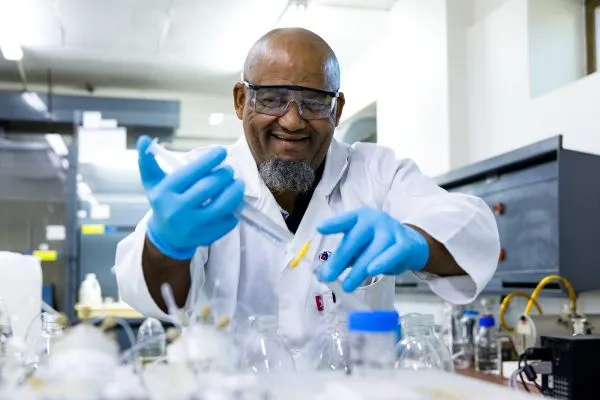
The laboratory analyses a wide range of environmental samples, from drinking water and wastewater to freshwater, groundwater and seawater and even sediments, plant material and biological tissues. These analyses help scientists and decision-makers understand how pollutants move through catchments and coastal ecosystems, and more importantly, when and what management actions need to be taken to avoid environmental and human health consequences.
“Human activities such as municipal wastewater discharge, mining and industrial processes all leave chemical traces in the environment,” explains laboratory manager Sebastian Brown. “Our role is to measure those traces accurately so that authorities can understand what is happening in the water system.”
“Many municipalities discharge treated wastewater through pipelines known as outfalls, which release effluent into rivers or the ocean. These discharges must be monitored to ensure they do not harm surrounding ecosystems,” says Brown.

The CSIR assists municipalities by measuring nutrients such as ammonia, nitrate, nitrite and phosphate, as well as trace metals and organic compounds. These measurements are used to assess whether wastewater treatment systems are performing effectively and whether discharges comply with environmental standards.
The CSIR has worked nationally with the Department of Environmental Affairs and regionally in the West Indian Ocean with the United National Environment Programme to established water quality guidelines. When problems occur, such as unexplained pollution in a river or the sea, the laboratory’s analyses can help identify likely sources and guide corrective actions.
South Africa’s long mining history means that trace metals remain an important environmental concern. One example is mercury, which can enter rivers and coastal waters through mining waste, industrial activities or acid mine drainage. Once in the environment, mercury can accumulate in sediments and living organisms, posing risks to ecosystems and human health.


CSIR experts measure low levels of nutrients such as ammonia, nitrite, nitrate, phosphate and silicate in seawater, drinking water, wastewater and industrial effluent. They use what scientists call automated colorimetric methods, which are high-throughput, computerised tests in which a specific colour change confirms the presence of a nutrient.
To strengthen national monitoring capacity, the CSIR laboratory has invested in specialised instruments such as a direct mercury analyser and an inductively coupled plasma mass spectrometer. These systems allow scientists to detect extremely low concentrations of mercury and other metals in environmental samples. With this capability, CSIR researchers have also joined global efforts to standardise mercury testing to protect environmental and human health.
The laboratory’s work extends beyond rivers and wastewater systems. It also supports environmental monitoring in South Africa’s ports. Sediments in ports must be dredged to maintain safe depths for shipping. Before dredged material can be safely disposed of, scientists must determine whether it contains harmful contaminants. The CSIR analyses port sediments for trace metals and other pollutants, helping the Transnet National Ports Authority ensure that maintenance dredging is conducted in an environmentally responsible way.
Behind every water sample analysed in the laboratory lies an important decision, whether it relates to wastewater treatment, pollution control or environmental permits.
“Our analysts focus on producing reliable, defensible data,” says Brown. “Decision-makers rely on that information when they need to manage pollution risks or improve treatment systems.”
The laboratory also supports innovative research projects within the CSIR, including trials of nature-based wastewater treatment systems that use algae to remove nutrients from water through a process known as phycoremediation.
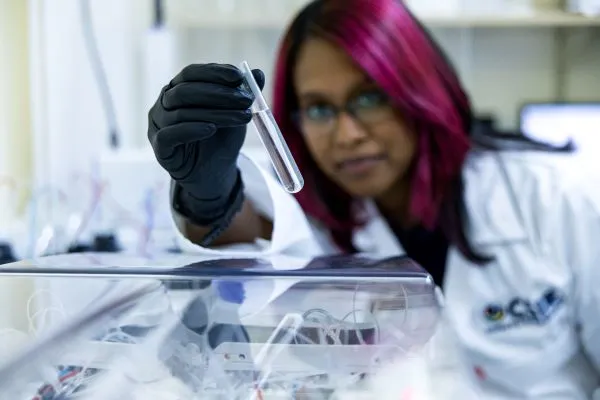
Much of the laboratory’s work takes place behind the scenes, with analysts working meticulously to ensure accuracy at low detection limits and to maintain standards demanded by national accreditation systems and international interlaboratory calibration exercises, but its impact reaches far beyond the laboratory benches and instruments.
By combining advanced analytical technology with rigorous scientific methods, the CSIR’s environmental chemistry laboratory helps municipalities, regulators and industry understand how human activities affect South Africa’s water systems and how those impacts can be reduced.
In a country where water is precious and vulnerable, these chemical insights help protect not only rivers, catchments and coastlines, but also the people and communities who depend on them.
The CSIR invites other government entities and industry to work with researchers at its environmental chemistry laboratory to survey the impact of human and industrial activities on South Africa’s water systems.
More information about our research, facilities and services: https://www.csir.co.za/what-we-do/natural-environment/sustainable-ecosystems/coastal-systems-and-earth-observation