Strengthening South Africa’s efforts in managing its aquatic ecosystems, such as estuaries, is vital for water and food security. In response, a team of estuarine and coastal experts at the CSIR have co-designed and presented a course, titled “Management of Estuaries in South Africa,” to government, conservation and academic organisation participants in Hermanus from 3 to 5 March 2026 with 51 participants and 14 presenters attending.
Across South Africa, the country’s estuaries remain highly threatened and under-protected, calling for multiple interventions that can assist in preventing further decline in estuary status and condition.
“This course aims to strengthen estuarine management across all tiers of government because estuaries are some of the most threatened ecosystems in South Africa and their management is critical. These high-value systems are under ever-increasing pressures resulting in declining condition and ecosystem productivity. Compromising the multiple benefits a diversity of users derives from them,” says principal researcher Dr Lara van Niekerk, who was joined by CSIR researchers Drs Susan Taljaard and Marie Smith.
In addition, the course equips participants to understand estuary structure and function, assess threats, and apply governance and management of these unique high-value ecosystems.
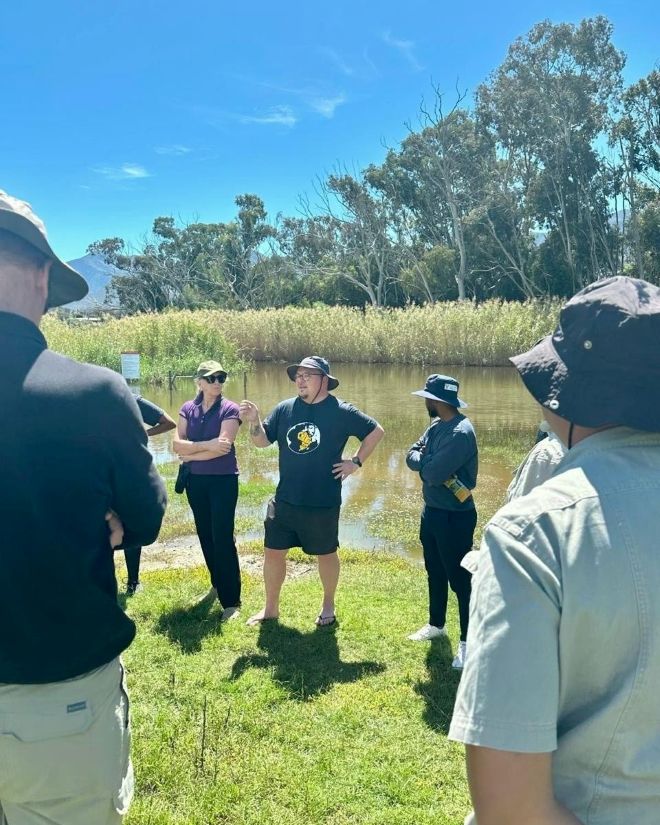
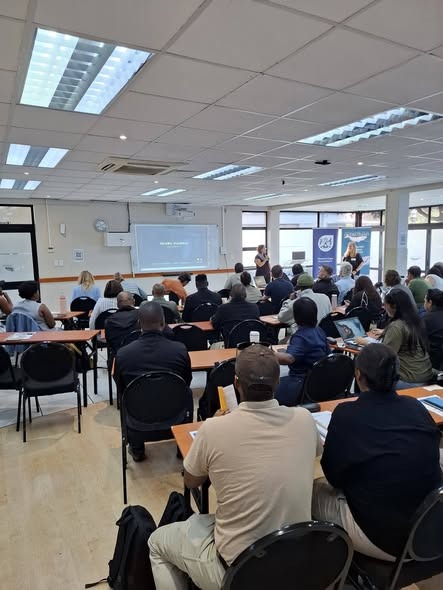
On day two of the course, participants familiarised themselves with the Klein River Estuary during a field trip. Popularly known as Hermanus Lagoon or Kleinriviersvlei, it is ranked the fifth most important in South Africa for its botanical value and fish and bird biodiversity(left). Overstrand Municipality’s Executive Mayor Alderman Archie Klaas popped in to pay a visit while course participants were in session for the “National Management of Estuaries in South Africa” course.(Right)
South Africa’s 290 estuaries are an essential link between rivers and the ocean. “Their management is crucial because not only do estuaries require protection from pollution, overfishing, and habitat loss, but they are highly productive threatened ecosystems that act as essential nurseries for fish, protect against floods and support coastal livelihoods, tourism and biodiversity,” says Van Niekerk.
The accredited short learning programme is run by the Institute for Coastal and Marine Research of Nelson Mandela University under the guidance of Prof. Janine Adams, who holds the South African Research Chairs Initiative in Shallow Water Ecosystems. This year, the Western Cape Government and the Overstrand Municipality co-hosted the group. Other collaborators and presenters of the course were from the Department of Forestry, Fisheries and the Environment, the Department of Water and Sanitation and CapeNature.
“The CSIR have been involved in the Estuary Management Course since its inception in 2006. We assisted in designing the material that addresses a variety of topics, including estuary legislation, mouth management, habitat zonation, fish and fisheries utilisation, and water quality management,” says Van Niekerk. It is anticipated that these interventions can contribute to improved management of the country’s estuaries, as indicated by stakeholders in attendance.
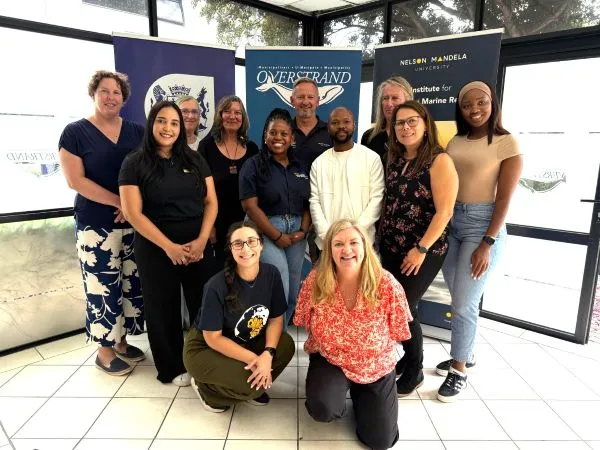
Included in the course’s three-day programme, was the sharing of case studies highlighting estuary rehabilitation efforts, managing estuary mouths and the risk of flooding and estuary water quality and development of harmful algal blooms, problematic invasive alien aquatic plants, the importance of managing the use of fish resources, the National Biodiversity Assessment 2025 highlights, and lively discussions and deliberations on management challenges.
Intensive theory was put into practice with a field trip to the Klein Estuary, a large (1 200 hectares) estuarine lake and major attraction in the Hermanus and Stanford area offering several recreational activities and ecological services. “This was one of the highlights, and it is where the participants were able to immerse themselves in the experiences and explore this unique, productive ecosystem where freshwater rivers meet the salty sea,” she says. The excursion was designed not only to reinforce the theoretical concepts but also to enhance field-based learning activities and gather observations.
Feedback received from the participants was very positive, with one stating, “I enjoyed the energy and passion, and the high-level knowledge of all the presentations – kudos.” And another expressed the wish, “I hope it is recurring, so more people/scientists have opportunities to benefit from such an insightful course.”
Overstrand Municipality’s Executive Mayor, Alderman Archie Klaas, visited the group to thank and commend participants and presenters for the work that they do in protecting estuaries, one of the key ecological assets of the local economy in Hermanus.
Published 16 March 2026