On the outskirts of Mossel Bay, a series of wastewater ponds are quietly doing important work. Water that enters the system as untreated effluent leaves cleaner, safer and suitable for reuse, thanks to a nature‑based solution that begins in the laboratory.
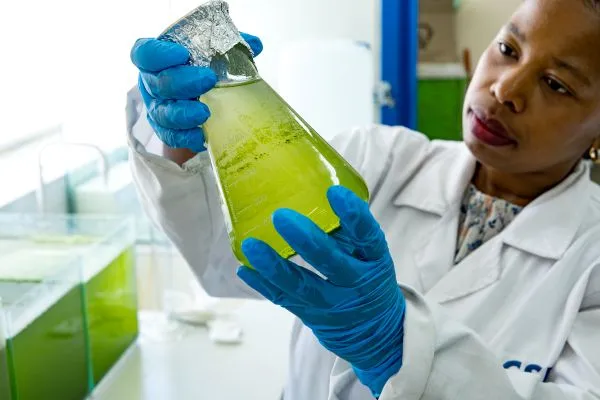
At the CSIR’s microbiology laboratories in Stellenbosch, researchers are cultivating algae to help municipalities respond to growing pressures such as ageing wastewater infrastructure, climate change impacts and urbanisation.
The work is part of a long‑running CSIR project that uses microalgae to improve water quality in a low‑energy, low‑cost way while delivering tangible environmental and social benefits. The project is funded locally by the Department of Science, Technology and Innovation, through a European Biodiversity Partnership programme.
“The algae are naturally occurring biomass, so we are using nature to heal itself,” explains the lead CSIR researcher on the project, Dr Luyanda Ndlela.


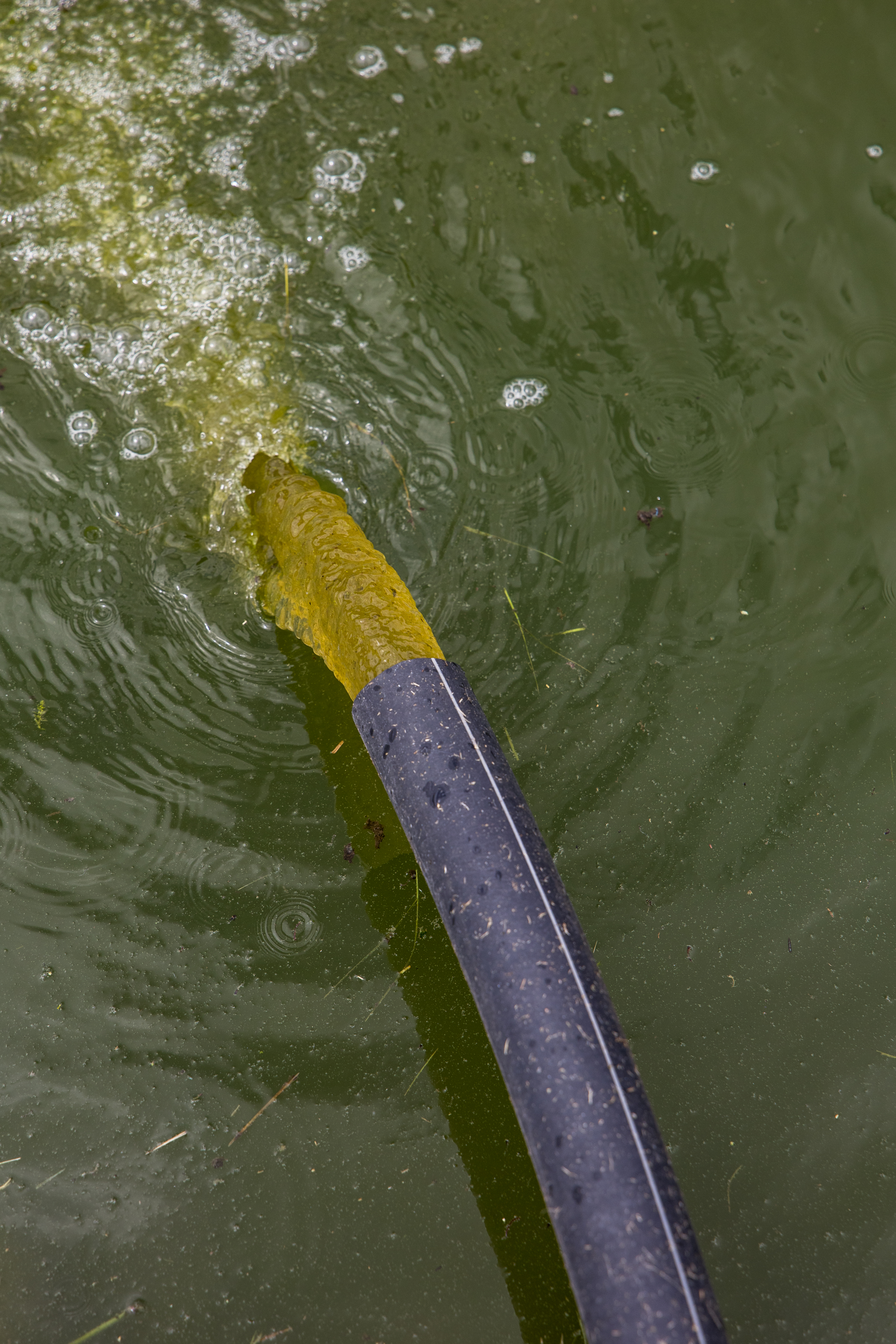
Once the algae co-cultures have reached the right volume and concentration at the CSIR microbiology laboratories in Stellenbosch, they are transported to Mossel Bay. There, training manuals guide municipal staff to build up the culture in bioreactors using sunlight and a CSIR-patented nutrient mix. From there, the algae are released into a series of wastewater ponds, where they begin to do what they do naturally: grow, outcompete harmful organisms like E. coli bacteria and absorb unwanted nutrients from sewage. .
Inside the Stellenbosch laboratories, algae are grown, monitored and prepared before being transported to Mossel Bay, where municipal teams continue cultivating them at scale. The laboratory work is essential: it ensures that the right strains are healthy, stable and able to perform once they are introduced into real‑world wastewater systems.
“What happens in the lab is basically that we have these naturally occurring algal isolates that we then create a co‑culture with,” Ndlela explains. “This means we grow two different species of the same genus, Chlorella, together.”
Researchers then use laboratory techniques like spectrophotometry, chlorophyll extraction and cell counts to track algal growth and health with precision.


Researchers use laboratory techniques such as spectrophotometry, chlorophyll extraction and cell counts to track algal growth and health with precision in the CSIR microbiology laboratories in Stellenbosch. The higher the colour intensity of green chlorophyll and the more cells they observe, the healthier and plentiful the algal biomass.
“Visually, you can see them becoming greener as they grow, but for scientific purposes we measure chlorophyll as an indirect measure of algal mass,” says Ndlela. “That tells us that they are actually growing and growing well.”
The cultures are upscaled using a CSIR‑patented medium that optimises growth and nutrient uptake. Once they reach the right concentration, they are transported to Mossel Bay as a pure co‑culture, accompanied by training manuals that guide municipal staff on how to continue the process on site.
“The municipality then builds up the culture in bioreactors using light and a bit of nutrients,” says Ndlela.
From there, the algae are released into a series of wastewater ponds, where they begin to do what they do naturally: grow, out-compete harmful organisms like E. coli bacteria and absorb unwanted nutrients from sewage.
“By outcompeting other indicator pathogens and dominating the ecosystem, they take up the nutrients,” Ndlela explains.
In Mossel Bay, the system works across seven ponds, with water moving through the treatment process over a period of about 10 days. As the algae dominate each pond in sequence, researchers monitor changes in conductivity, pH, chemical oxygen demand and microbial load.
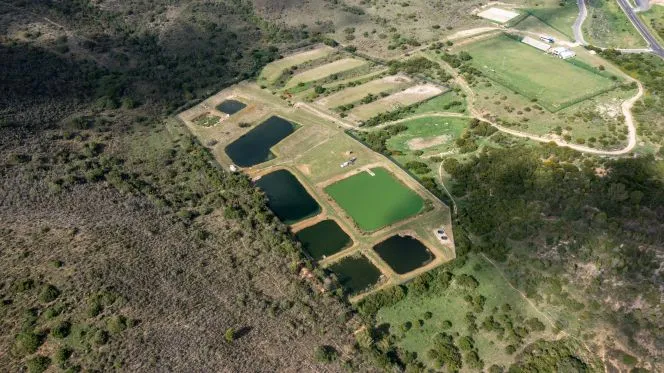
“We had some E. coli issues and with this project it has basically reduced the E. coli in the groundwater,” says Gershwin Kock, assistant manager of wastewater treatment at Mossel Bay Municipality.
“We’ve seen a reduction of up to 90% of nitrates and phosphates and a 10 000‑fold reduction in pathogens such as E. coli,” says Ndlela.
These improvements matter not only for regulatory compliance, but for the wider environment and local economy. In Mossel Bay, treated water does not flow directly into a river; instead, it impacts groundwater that is abstracted downstream for agricultural use.
“This technology has improved the groundwater and the farmers are happier about the type of effluent they’re getting for agricultural purposes,” says Kock.
The success of the project in Mossel Bay is closely tied to the strength of the partnership between the CSIR and the municipality. Over nearly a decade, the municipality has consistently maintained the system, followed technical guidance and stayed engaged with the research team.

This consistency has allowed CSIR scientists to move beyond short‑term pilots and study how the technology performs over time in real environmental conditions.
“You can do a lot in the lab, but it is only once the system is out in the environment that you really understand how it functions,” Ndlela explains. “This relationship has enabled us to keep refining and improving the technology.”
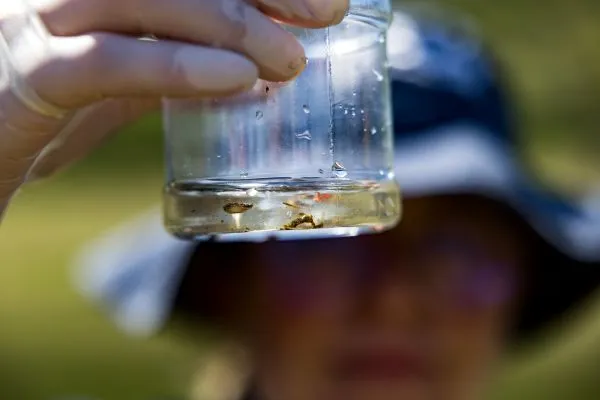
Beyond improving water quality, the algae‑based system has also contributed to ecological recovery. As nutrient levels and pathogen loads decrease, other organisms begin to return.
“You start seeing things like water fleas, tadpoles and insects in the final ponds,” says Ndlela. “Those are very sensitive indicators and you would not find them in highly contaminated water.”
While the results are encouraging, Ndlela is careful to emphasise that the work is ongoing.
“This is very much a work in progress,” she says. “We don’t have all of the answers, but we know enough now to say that it is functional, consistent and capable of supporting wastewater treatment.”
One concern often raised about algae‑based systems is whether the algae themselves could become a problem once released. Ndlela says this is a misconception.
“These algae are naturally occurring,” she explains. “They’re applied in a controlled system, and they’re already part of natural aquatic ecosystems when conditions allow. We’re not introducing anything alien or invasive to the environment.”
Looking ahead, the CSIR is exploring how the algal biomass itself could be harvested and repurposed for feed, bio-packaging or biofuels, contributing to a circular economy.
“At the final treatment pond, we want to extract all of that biomass to close the loop by using it for other things,” says Ndlela, cautioning that careful risk assessment and ongoing research is still needed since the algae have been exposed to sewage.
Nevertheless, the Mossel Bay project is building momentum for wider adoption of nature‑based solutions, within other municipalities and in industry.
By linking laboratory science in Stellenbosch with practical, on‑the‑ground implementation in Mossel Bay, the project demonstrates how research infrastructure, long‑term partnerships and ecological thinking can come together to address some of South Africa’s most pressing water challenges.
As Ndlela puts it, improved water quality does more than meet technical standards. “It fulfils the mandate of improving people’s lives through science and it brings an awareness of what nature can provide when we work with it, rather than against it,” she says.
“This approach was easy for us to implement because it’s less operational and requires no electricals or mechanical input; it’s just manpower and it’s light work,” says Kock. “Nature‑based solutions are the way forward and there is definitely a place for them in a more advanced world of wastewater treatment.”
The CSIR invites municipalities and industry to explore and partner on nature-based water treatment solutions.
More information about our research, facilities and services: https://www.csir.co.za/what-we-do/natural-environment/water
Published 17 March 2026