Imagine transforming forestry waste and agricultural by-products, such as sawdust and sugarcane residues, into high-value green chemicals, advanced materials, sustainable fuels and green energy. That is the promise of biorefineries: converting biological resources into a spectrum of market-ready products, much like petroleum refineries do with crude oil, but using renewable biomass as feedstock.
Globally, businesses and industries are looking to decarbonise their chemical sectors as part of green and circular commitments to advance green chemical industrialisation. For more than 15 years, South Africa has invested in building a science, technology and innovation (STI) ecosystem that positions biorefineries at the heart of decarbonisation, industrial diversification and circular economic growth.

What distinguishes South Africa today is not only the coherence of its policy framework but the presence of infrastructure that translates research into scalable opportunity, most notably the Biorefinery Industry Development Facility (BIDF), which has ensured South Africa’s biorefinery journey matures from policy ambition into tangible industrial capability. Funded by the Department of Science, Technology and Innovation (DSTI), located at the Council for Scientific and Industrial Research’s (CSIR) campus in Durban.
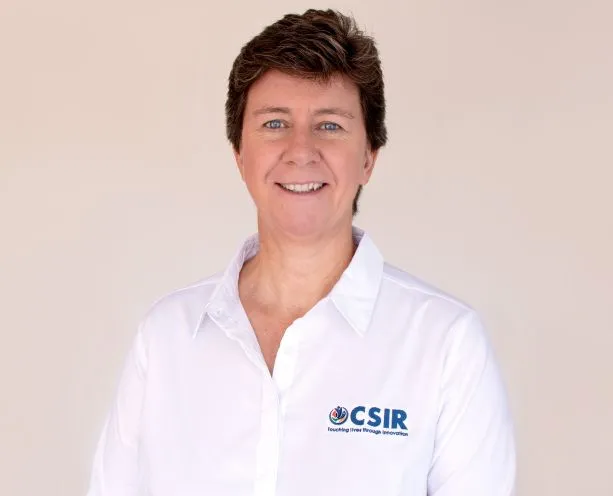
Speaking at a biorefineries stakeholder engagement session, held on 3 February 2026 at the BIDF, Prof. Linda Godfrey, CSIR Principal Researcher and Manager of Circular Innovation South Africa, said, “National strategies have consistently reinforced and advanced biorefineries. The Bio-Economy Strategy formally identified integrated biorefineries as a strategic intervention for economic development. The Waste RDI Roadmap reframed organic waste as a valuable feedstock for second-generation biorefineries, while subsequent frameworks, including Government’s White Paper on Science, Technology and Innovation and new Circular Economy STI Strategy, embedded biorefinery innovation within South Africa’s low-carbon transition.”
A flagship biorefinery innovation is the transformation of low-value forestry sawdust into high-value dissolving wood pulp and speciality chemicals. Xylose streams derived from lignocellulosic biomass are developed for conversion into xylitol, a commercially valuable sweetener.
Pine oil extraction processes are refined, while nanocrystalline cellulose fibres are produced for advanced material applications. The facility also supports the sustainable conversion of agricultural residues such as maize stalks and sugarcane bagasse, reinforcing South Africa’s move toward second-generation biorefineries that do not compete with food production.
Beyond technical validation, the BIDF plays a catalytic role within the broader circular economy ecosystem. By providing demonstration-scale infrastructure, it lowers capital risk, supports small, medium, and micro enterprises and strengthens collaboration between researchers, industry and government. In a market where fossil-based products remain entrenched and biomass supply chains can be fragmented, this bridging function is critical.
“South Africa’s policy environment for biorefineries is among the most supportive in the developing world. The country has maintained consistent government commitment, invested in catalytic funding and built credible institutional capacity. The BIDF embodies this long-term investment, translating national strategy into industrial capability,” she added.
Biorefineries in South Africa are no longer confined to research papers or policy documents. Through the BIDF, they steadily become part of the country’s industrial landscape, positioning South Africa to compete in a global economy increasingly defined by sustainability, circularity and low-carbon growth.
“Turning this vision into industrial reality requires more than research excellence. It demands pilot-scale validation, process optimisation and de-risking mechanisms that give industry the confidence to invest. The CSIR’s Biorefinery Industry Development Facility was established precisely to serve this purpose, acting as a bridge between laboratory discovery and commercial deployment,” added Dr Viren Chunilall, Research Group Leader at the CSIR’s BIDF.

The BIDF has been established to help local industry improve its competitiveness by providing access to specialised analytical and pilot-scale facilities, as well as skills that enable the more efficient use of our biomass resources, overcome significant organic waste challenges and develop new products for markets. Click here for more information.