Three innovative food products developed from Orange-Fleshed Sweet Potato (OFSP) are set to enter the South African food markets, marking a significant milestone in efforts to strengthen the country’s food innovation ecosystem, while unlocking economic opportunities for local small businesses. The products were launched at the OFSP stakeholder workshop held at the Council for Scientific and Industrial Research (CSIR) on 28 January 2026.
Funded by the Department of Science, Technology and Innovation (DSTI) and Technology Innovation Agency (TIA), this initiative is led by the Agricultural Research Council (ARC), in collaboration with the Council for Scientific and Industrial Research (CSIR) and Southern Africa Network for Biosciences (SANBio). It was born out of an international workshop, held in March 2021, on ways of exploiting the health, nutritional and economic potential of OFSP.
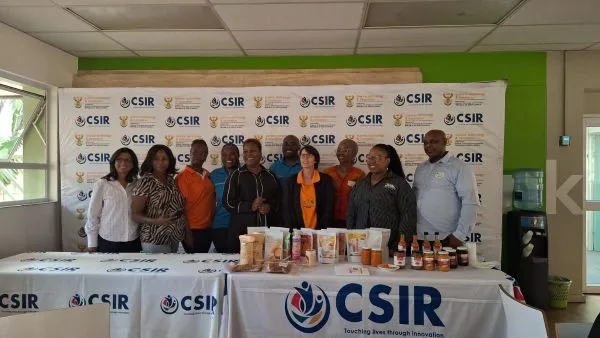
“This workshop was attended by several national, regional and international role players representing government, science councils, private sector, farmers, technology partners and funding agencies, that this project team continues to engage and work with,” explains Professor Michael Bairu, the project principal investigator from the ARC.
Aimed at de-risking local OFSP value chains to enable scale, increase market uptake and support the growth of small, medium and micro enterprises (SMMEs), the team successfully incubated Kgarose Kgaros, Sibocali Foods and Success Foods, who were supported with the development of three OFSP-based products spanning sweet potato flakes, instant porridge and baking flour, which are now ready for commercial rollout. The project also follows two decades of efforts by the ARC promoting OFSP for alleviating vitamin A deficiency.
Dr Nomusa Dlamini, Research Group Leader: Nutrition and Food Safety at the CSIR, says: “OFSP, widely recognised for its high beta-carotene content and nutritional benefits, has long held potential to address both food and nutrition security as well as economic inclusion. However, fragmented supply chains, postharvest losses and limited processing capacity have constrained its commercial growth. The project was designed to tackle these challenges directly.”

Dr Sunette Laurie, Project Manager and Specialist Researcher at the ARC, further added that market analysis conducted by the Agricultural Research Council during product development showed more than 90% consumer acceptability of the OFSP products, indicating strong potential for uptake once the products reach retail shelves. The ARC took part in public engagement activities and participation in various events that have further increased awareness of OFSP and its nutritional value among consumers and industry stakeholders.
To strengthen this technological capability, the DSTI awarded R18 million for the acquisition of a Microwave Food Processing Unit, a mobile unit that will complement the TIA-supported project and provide flexible processing capacity closer to producers and entrepreneurs.

“A key innovation supporting the initiative is the integration of microwave food processing technology aimed at reducing postharvest losses, one of the major risks in root crop value chains. The microwave technology, currently undergoing testing and planned for integration with participating SMMEs, is expected to enhance processing efficiency, improve shelf life and preserve nutritional quality,” Dr Dlamini adds.
With the initial development phase completed, the project team is now finalising a commercialisation plan for the OFSP products, focusing on market positioning, distribution and long-term sustainability of the value chain.

A proposal for Phase Two has also been developed by the Tri alliance, with a focus on scaling up production, deepening SMME participation and expanding market penetration. Additionally, two more SMMEs were incubated beyond the original project target, thus expanding the programme’s impact.
“The secret to commercialisation of sweet potato products is when the crop has found its place among the family of potatoes, aligned to the African Continental Free Trade Area agreement and Science, Technology and Innovation Strategy for Africa 2034,” adds Dr Ereck Chakauya, Agency into the African Union Development Agency-NEPAD (AUDA-NEPAD) SANBio Network Manager, whose role is to ensure the OFSP products reach a wider African market.