Laser surface modification
Our laser-based engineering solutions are applied in the repair, refurbishment and manufacturing of components and equipment. Novel and specialised, these services typically reduce costs, saving time by limiting downtime, minimising wastage and improving performance.
Contact information:
Highlights
Partnering for solutions to help reduce power downtimes
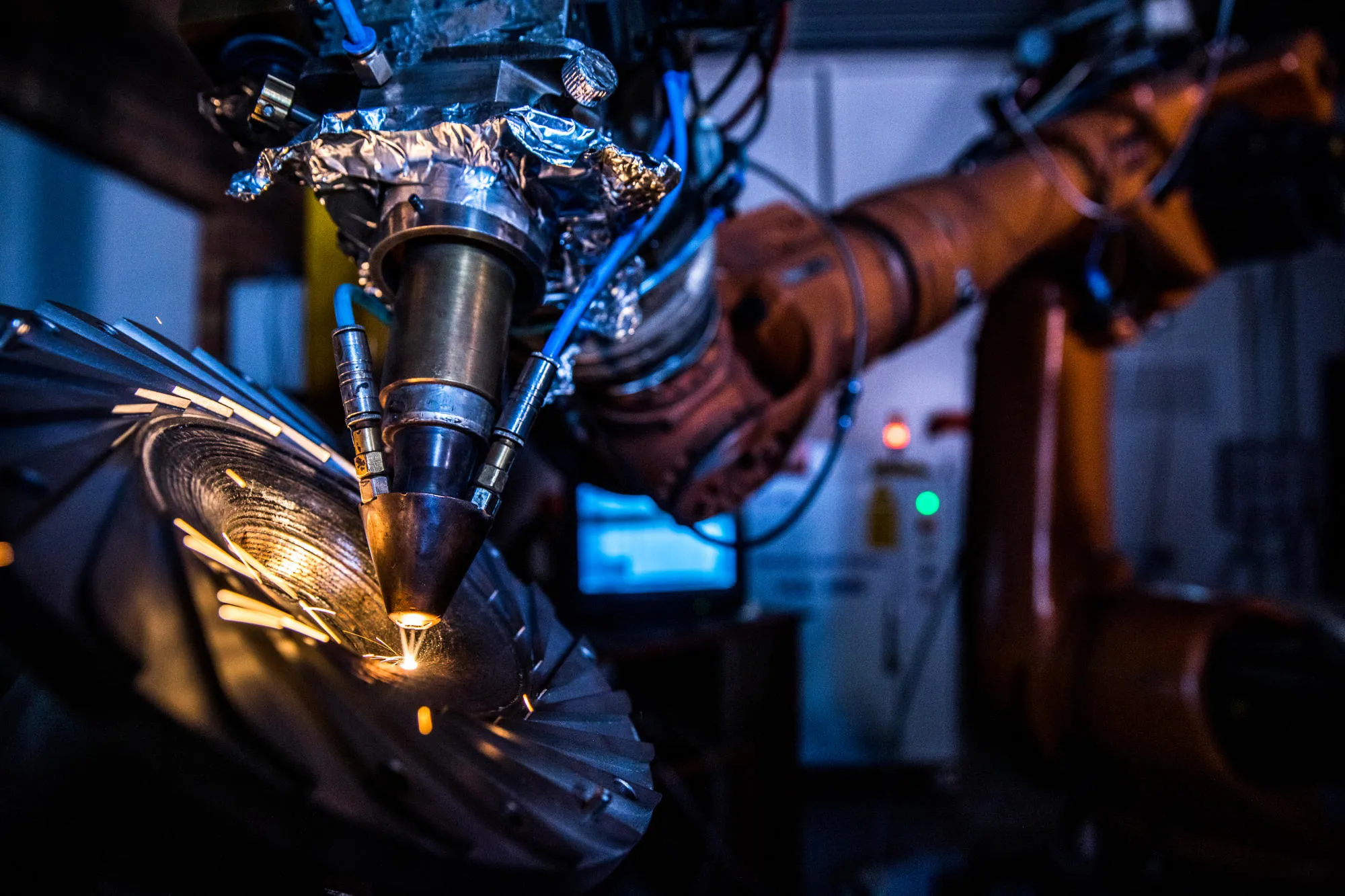
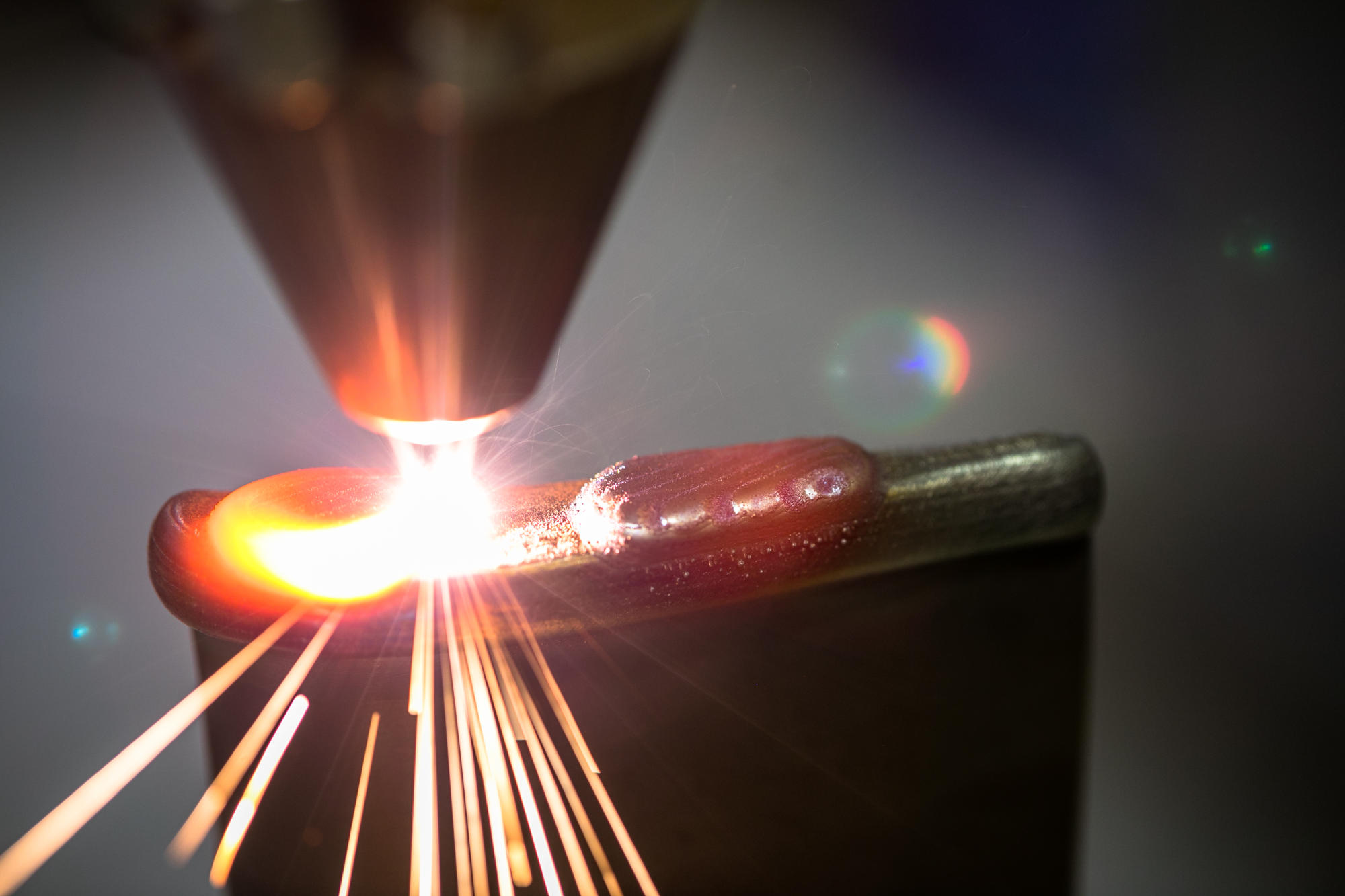
Through a long-standing research and development partnership with Eskom, the CSIR has developed laser-based technologies and techniques to maintain and refurbish high-value components such as boilers, seals and turbine blades. Several power stations have benefitted from laser cladding, a process in which metal is deposited and welded onto the exact position of a worn component. Lasers are particularly well suited to this method due to their low heat input, high speed and the precision enabled by a robotically controlled arm. Accuracy is critical in this context to prevent distortion and ensure that components fit seamlessly into the turbine.
Refurbishing at client site
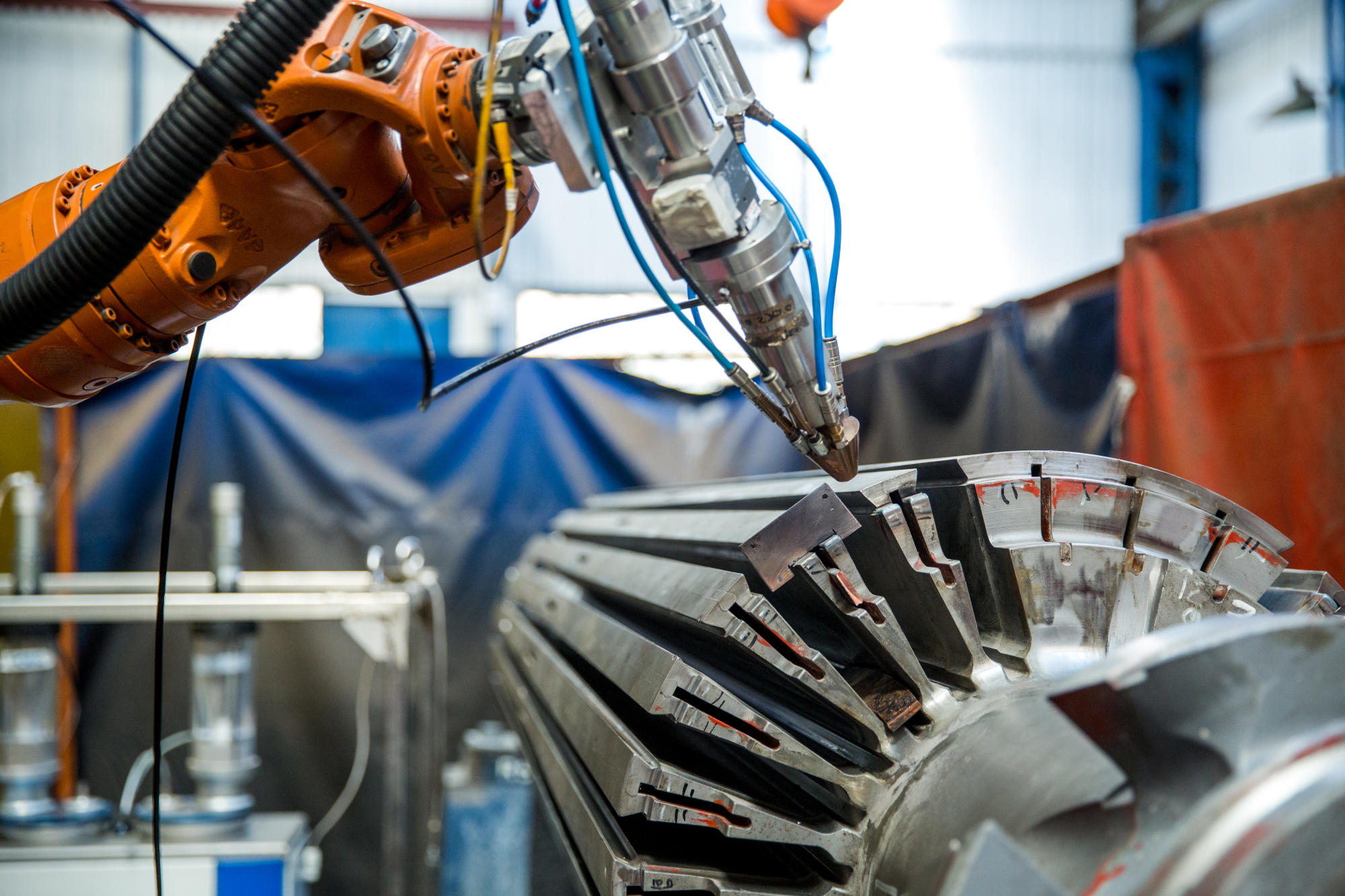
Our team has worked on numerous projects for MAN Energy Solutions, including the repair of damaged rotor journals and the upgrading of an axial flow compressor blower. Laser-based welding is increasingly popular due to benefits such as a 10 times lower heat input compared to conventional welding, as well as the accuracy achieved by the laser focusing on a small spot size in each weld.
Our capabilities
We have a range of technologies and techniques used in industrial applications. The choice of technology for resurfacing is influenced by warranty stipulations, materials, the nature of the damage, the type of component, the cost of replacement and the urgency of refurbishment.
Laser welding
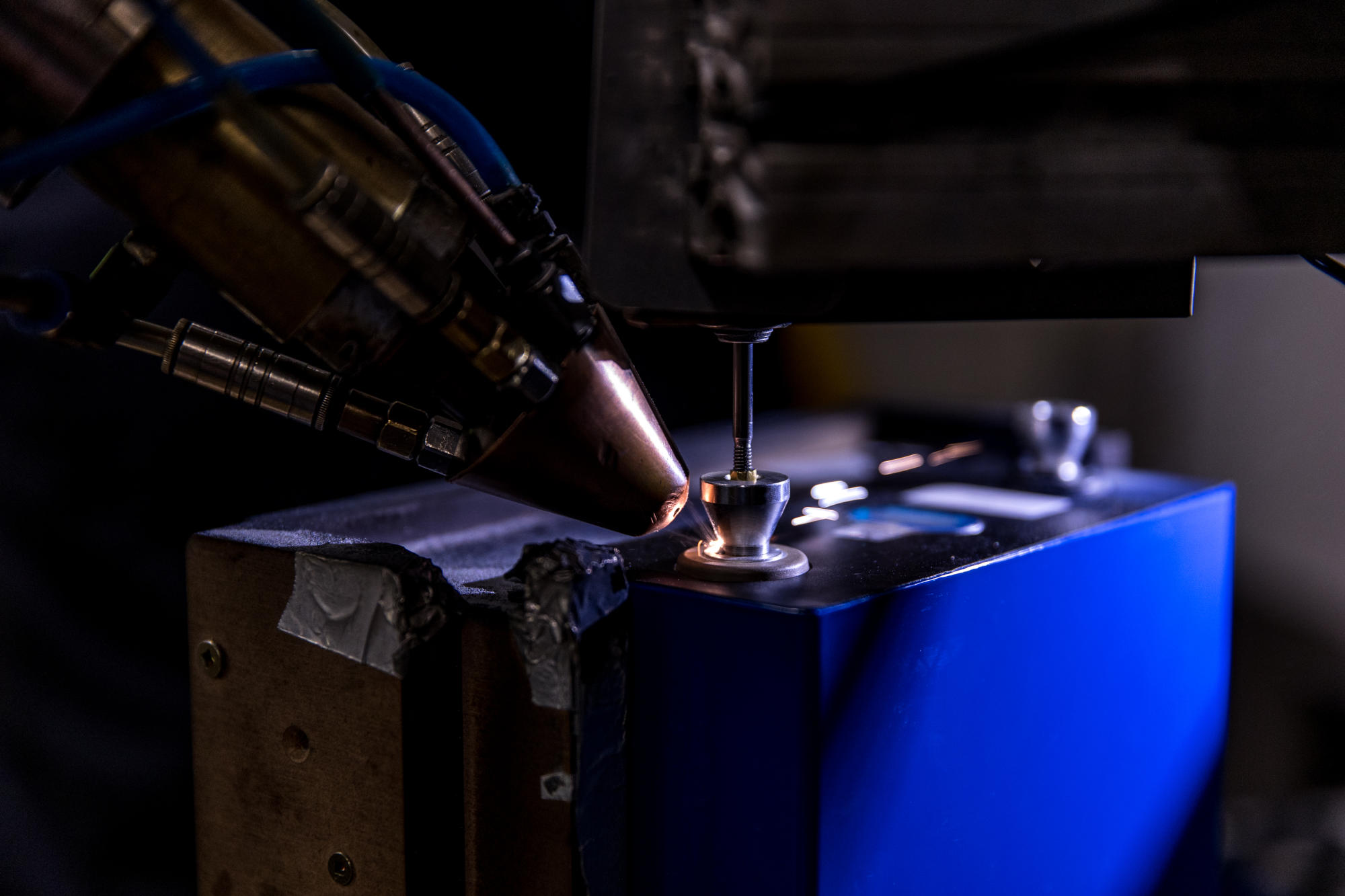
The laser welding process joins components using a laser source, with or without any filler material. This form of refurbishment can be used for automotive body panels, lightweight structures and stainless-steel tubing.
Laser shock peening
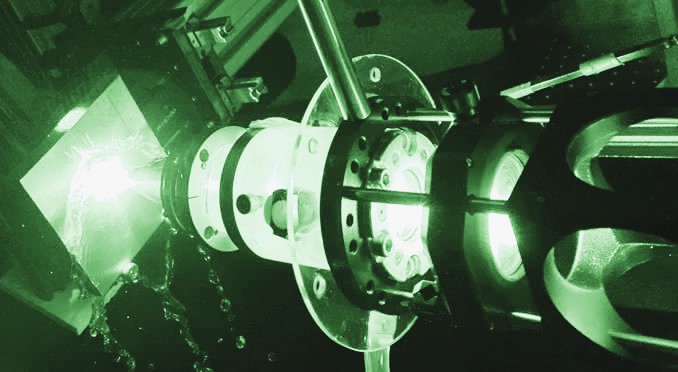
This innovative surface treatment induces compressive residual stresses on and beneath the surface through high-magnitude shock waves generated by a high-energy laser pulse. It improves wear characteristics, corrosion resistance and fatigue properties of components. Laser shock peening is applied across a variety of engineering sectors where surface degradation is a major concern.
Laser cladding
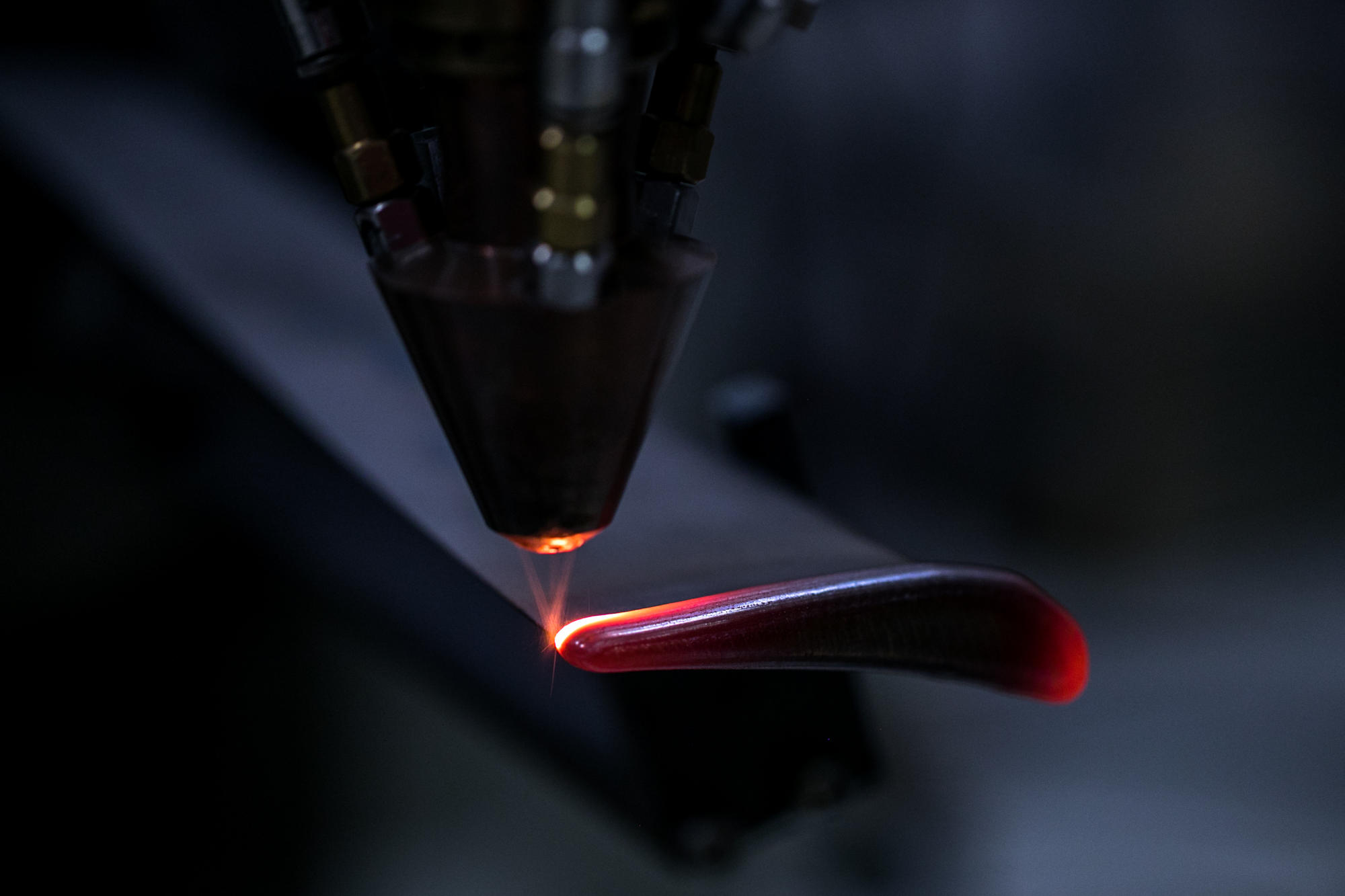
Laser cladding or welding is fast and accurate, but also expensive. It is a laser weld overlay technique also known as direct energy deposition, direct laser deposition, direct metal deposition, laser hardfacing or laser hardbanding. The process is applicable to the repair of moulds, shafts, turbine blades and press tools.
Our facilities
Mobile laser unit
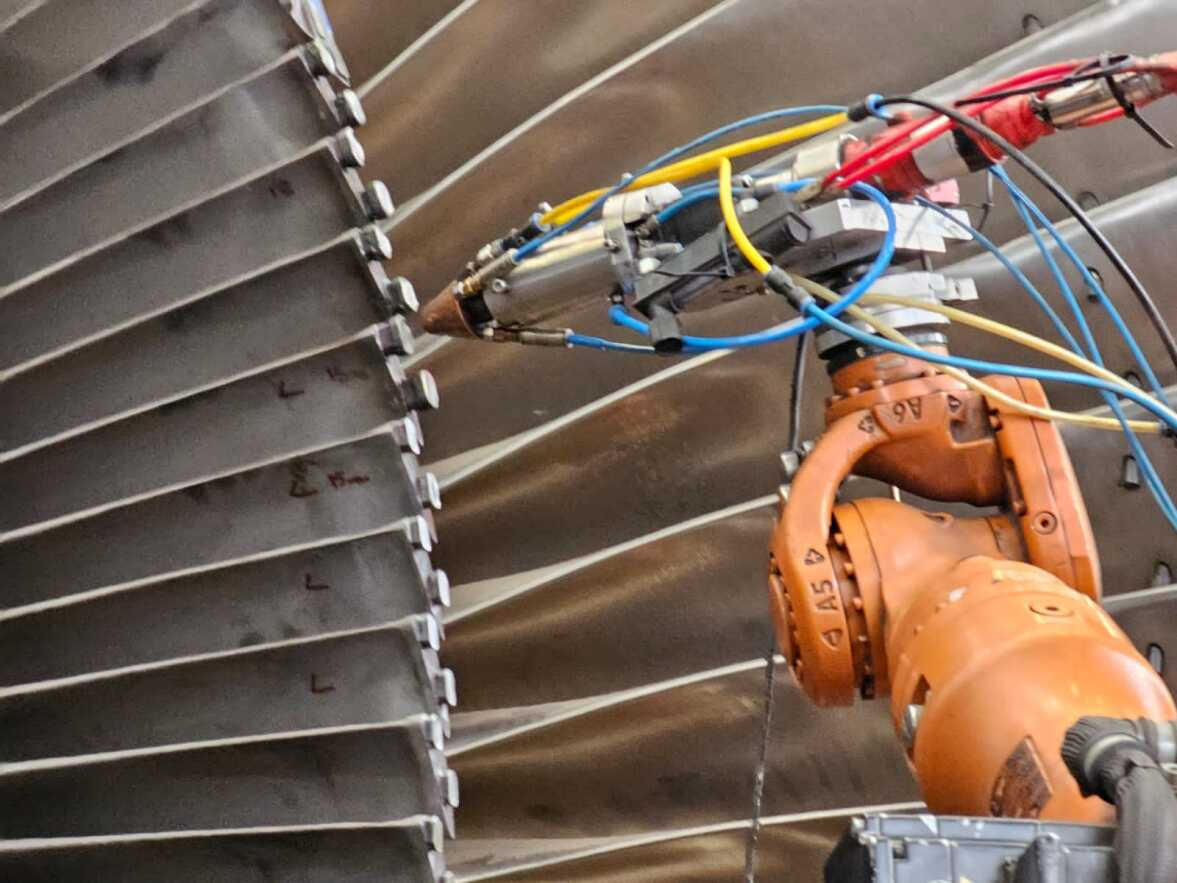
Our mobile facility is designed to support laser-based manufacturing or refurbishment of components at client sites. The unit comprises a high-power laser coupled with a fibre-based delivery system incorporating a laser welding head mounted on a flexible robotic arm that enables accurate and repeatable positioning. The system can be rapidly deployed and is ideal for emergencies or hard-to-transport items.