Luanda pilot links CSIR’s TV white spaces technology with ANGOSAT-2
In April 2026, the CSIR signed a contract with Angola’s national space agency to deliver affordable satellite internet to rural communities using patented spectrum-sharing technology developed at the CSIR.
The pilot project centers on ANGOSAT-2, Angola’s communications satellite designed to provide high-speed internet coverage. Prof. Luzango Mfupe, a chief researcher and information and communication technologies expert at the CSIR, says the challenge is how to make satellite internet accessible and affordable on the ground.
“They will need some form of a terrestrial network because the satellite is in space. And this infrastructure should be affordable. Unfortunately, existing satellite terminals are too expensive for end-users, particularly those residing in rural areas,” he explains.
A cost-effective solution lies within the television spectrum, using television white spaces technology or television white spaces (TVWS). TVWS are unused portions of the radio frequency spectrum in the ultra-high frequency band traditionally allocated for television broadcasting. In simple terms, if television channels are assigned lanes in the spectrum, then white spaces are the empty lanes that exist at particular times and places where broadcasters are not using certain frequencies
“ANGOSAT-2 can provide high-speed internet down to the ground to feed into the TVWS terrestrial network,” explains Mfupe. “The TVWS network operators will then distribute this capacity affordably to people’s devices.”
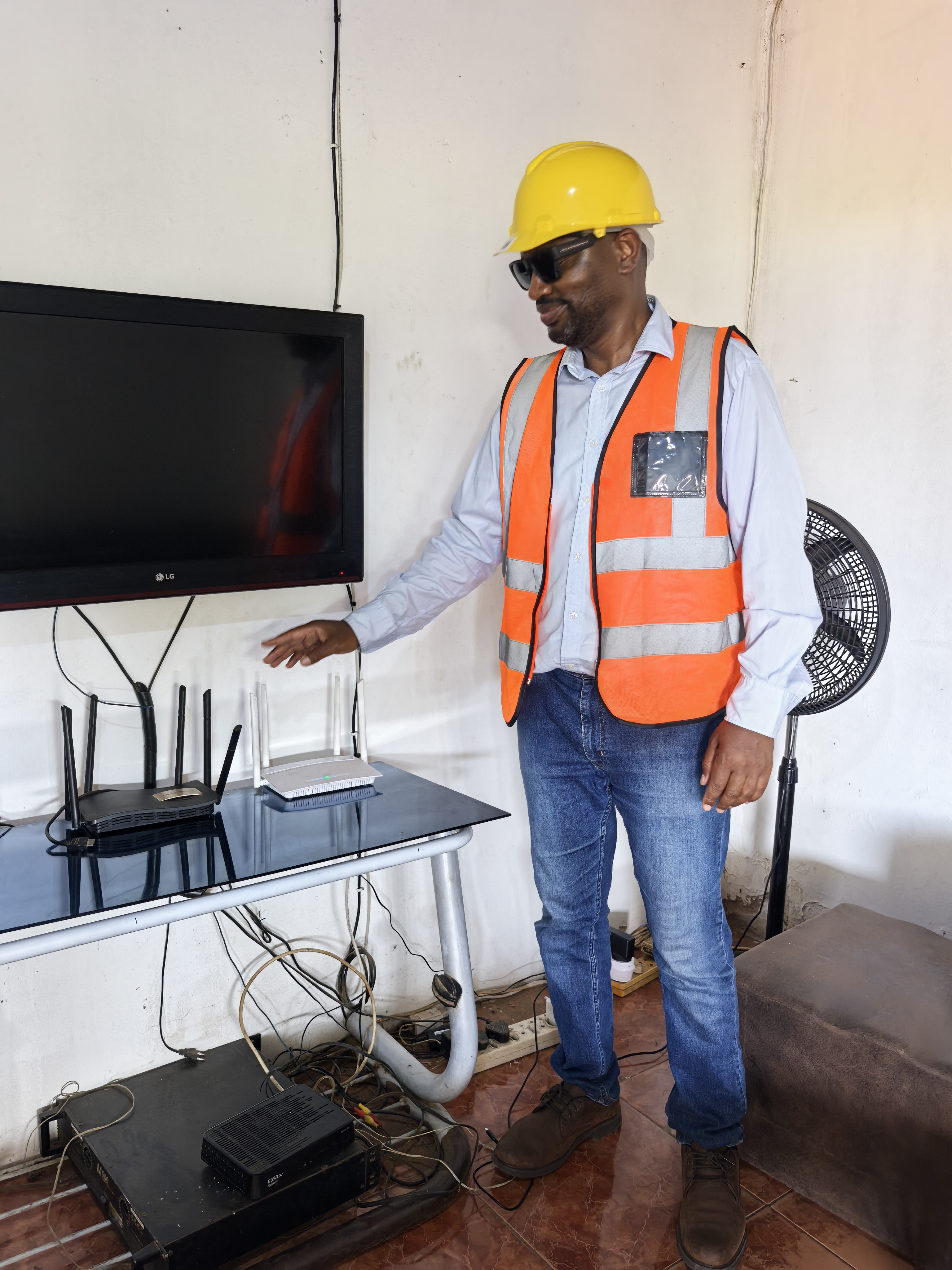
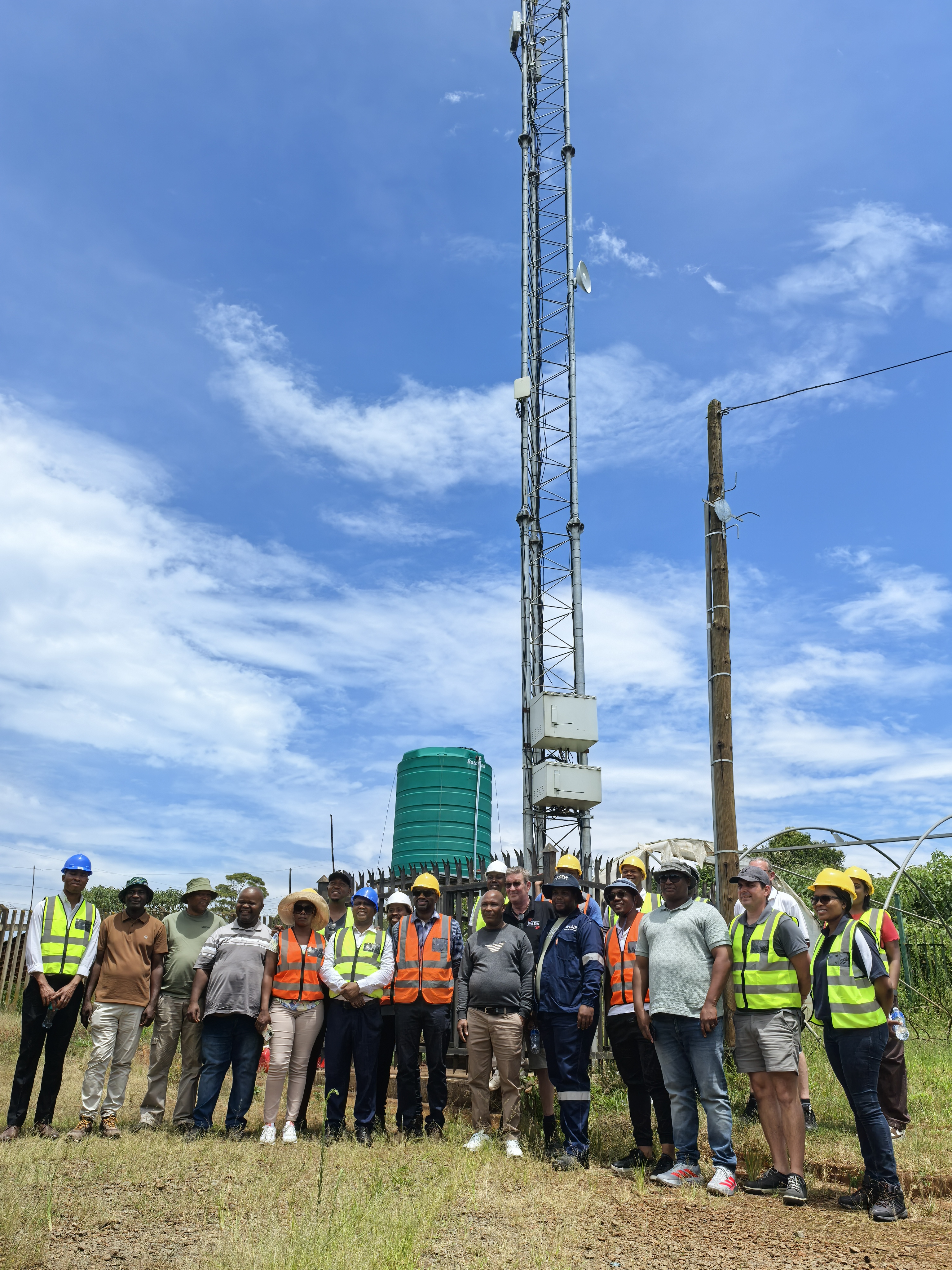
The CSIR’s Prof. Luzango Mfupe visits the household of a beneficiary community member of the 5G network pilot project providing high-speed internet using the CSIR’s dynamic spectrum access technology in Ntuzuma, eThewkwini Metro, KwaZulu-Natal(left). Dynamic Specturm Access Council Committee (right)
The CSIR’s Prof. Luzango Mfupe visits the household of a beneficiary community member of the 5G network pilot project providing high-speed internet using the CSIR’s dynamic spectrum access technology in Ntuzuma, eThewkwini Metro, KwaZulu-Natal
The Luanda pilot will be the first instance where the CSIR team integrates TVWS technology with satellite communications. They will also provide a toolkit for the appropriate regulations, software and infrastructure to support the project. AdNotes, a South African small business and the CSIR’s TVWS technology champion, is supporting the Luanda pilot with the installation of the TVWS equipment.
Mfupe says this is the latest in a string of projects that the CSIR has led on the continent since the spectrum-sharing technology was first invented by Mfupe’s team in 2013 (with international patents granted in 2016).
A TV white spaces base station installed on top of a tower for the TVWS satellite pilot project located in Ramiro, Luanda, Angola
The key innovation behind the wholistic toolkit the CSIR provides to partner countries is called “spectrum switching”, which enables dynamic spectrum access. It works by continuously finding and switching to unused slots in the ultra-high frequency band of the radio frequency spectrum (470 to 698 MHz). This band is primarily allocated for television broadcasting. Spectrum switching enables radio equipment to transmit information wirelessly without causing interference to primary users of the band.
Like cars moving in and out of parking spaces in a parking lot, the frequencies occupied by broadcasters are constantly changing, so the CSIR’s technology dynamically finds and uses empty slots without interfering with broadcasting.
Mfupe says the first consideration in their approach is helping to set the rules for coexistence between internet providers and broadcasters. Regulatory frameworks must ensure that the primary users of the spectrum remain with television broadcasters, so that TV viewers do not experience degraded or interrupted broadcast reception.
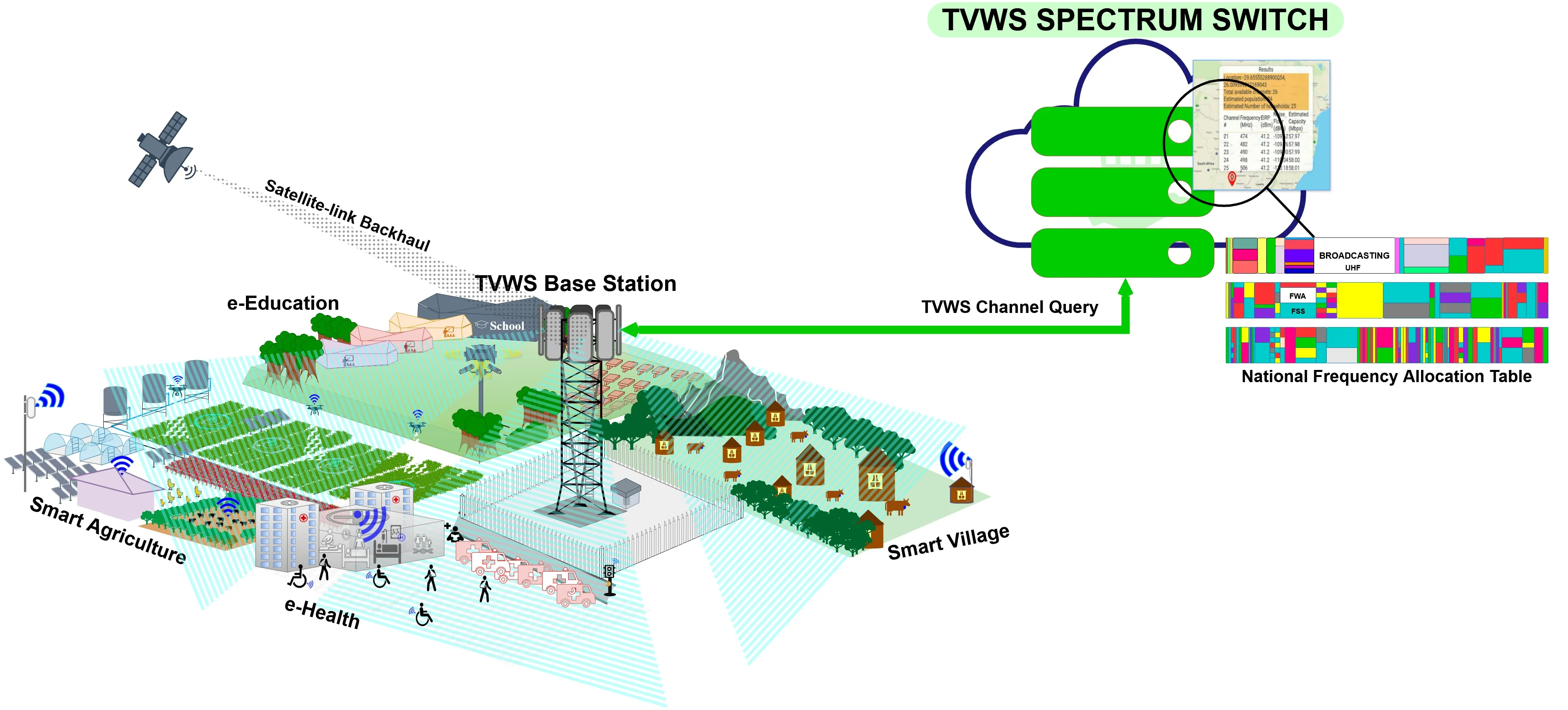
The second is the software toolkit. In South Africa, the CSIR developed a software system with a regulator-facing component and an operator-facing component. The regulator-side component allows the authority to enforce the rules, while the operator-side component supports internet service providers in using the spectrum compliantly. The two parts must communicate, enabling the regulator’s rules to be applied in the field.
The third is the physical network infrastructure deployed by network operators. Once installed, the infrastructure communicates automatically with the operator-facing system, which in turn aligns with the regulator-side controls.
“The physical network infrastructure and the operator-facing software toolkit components talk to each other at least once every 24 hours,” Mfupe says. If an installation does not check in, it is given a limited grace period, after which it must stop transmitting to reduce the risk of interference.
Through the CSIR’s long-running work in dynamic spectrum access and spectrum management, Mfupe and his colleagues have helped several African countries move beyond early trials and towards practical frameworks and tools that enable deployment.
TVWS internet transceiver equipment installed on the rooftop of Liceu Secondary School, located at Ramiro, Luanda, Angola
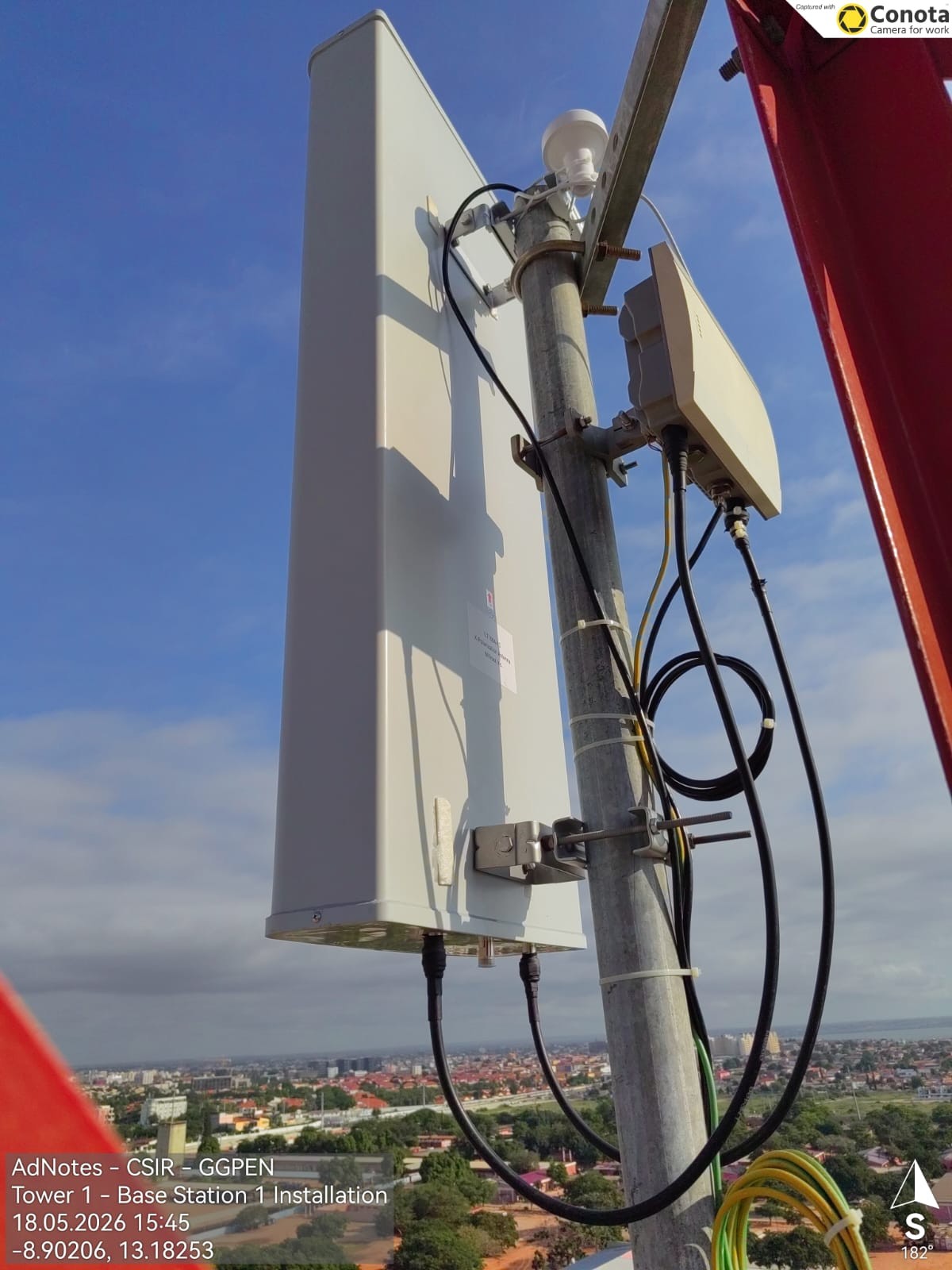
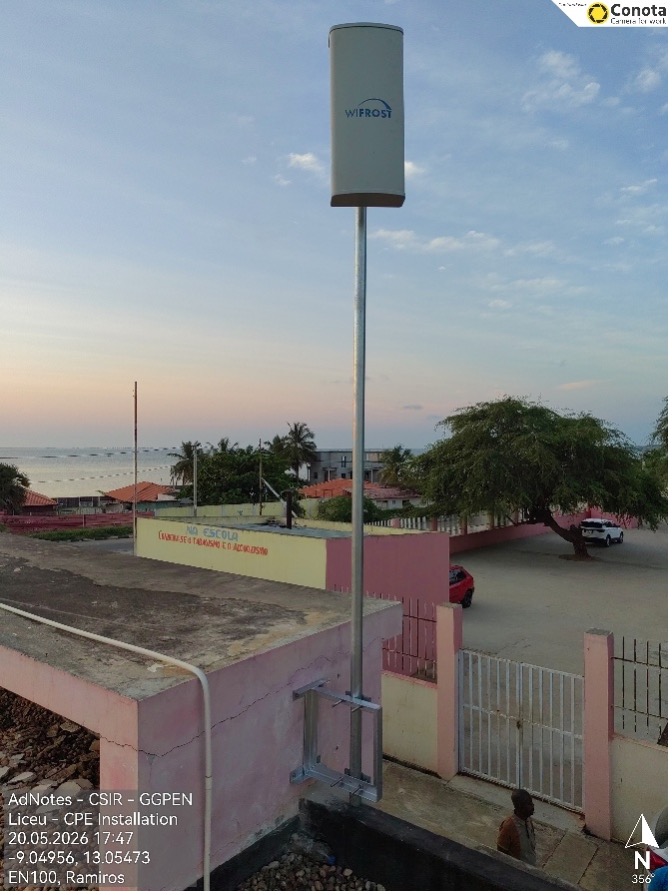
A TV white spaces base station installed on top of a tower for the TVWS satellite pilot project located in Ramiro, Luanda, Angola (left). A TV white spaces base station installed on top of a tower for the TVWS satellite pilot project located in Ramiro, Luanda, Angola (right).
In 2014, The CSIR demonstrated this approach and the technology in partnership with the Ghana University of Technology.
In 2016, the CSIR collaborated with the Botswana Institute for Technology Research and Innovation on training, seminars, localisation of the technology and a pilot deployment.
In 2019, Kenya’s communications authority engaged with the CSIR through a study visit facilitated by the Independent Communications Authority of South Africa. During the visit, the CSIR demonstrated the tools developed for South Africa and shared lessons on the kinds of systems regulators need to operationalise TVWS. “When they went back, I think a year later, they published the regulatory framework in Kenya,” Mfupe says.
More recently, in 2023, Tanzania's communications ministry contracted the CSIR for consultancy work, in collaboration with the University of Dar es Salaam, to analyse the policy, legal and technology landscape for using the technology for rural broadband. This was followed by a pilot focused on connectivity on campus.
“The aim was to create hotspots where students could access the internet even when they were not in formal study areas and the technology is still running there today,” says Mfupe.
In Zimbabwe, where telecommunications and broadcasting fall under separate authorities, implementing TVWS is complex. Because the spectrum belongs to broadcasting, but networks require telecommunications licenses, coordination is essential. Mfupe says the CSIR has been in discussions with Zimbabwe’s broadcasting authority for the past two years to help find workable approaches and the telecommunications authority has now joined those discussions.
Now, Mfupe’s focus is on demonstrating the new pilot satellite-internet network in Luanda in time for a June 2026 launch event that will coincide with a major international conference hosted by Angola’s space agency (Gabinete de Gestão Espacial Nacional).
“Like all our projects in Africa, we will support Angola with a toolkit covering regulation for coexistence between terrestrial wireless communication network infrastructure and satellite communication infrastructure, as well as the software and ground infrastructure required,” says Mfupe.
“If this works as expected, it will be the model they roll out throughout the country.”
More information on https://www.csir.co.za/what-we-do/digital-solutions-and-services/broadband-technologies
Read more about the CSIR's footprint in Africa in our Allies in Africa story selection, in celebration of Africa Day 2026
Published 26 May 2026