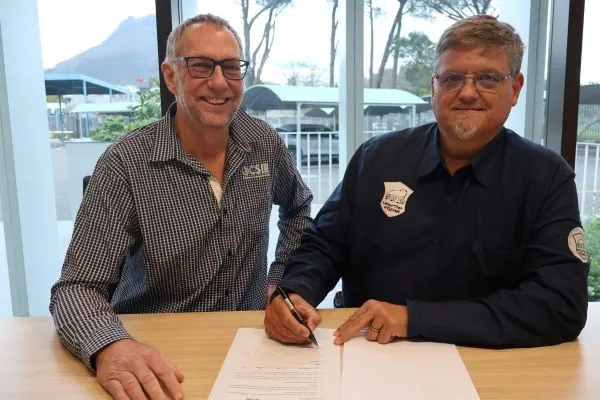
The CSIR and Mega-Titan Power have joined forces to advance and localise next-generation high-voltage battery management system technologies. The two entities signed a Memorandum of Understanding on 21 May 2026 in Pretoria, marking the beginning of the collaboration.
The partners will develop a battery management system known as the “brain" of the battery, essential for ensuring all cells within a system work in perfect harmony through advanced cell balancing and condition monitoring. By optimising how energy is distributed, these systems will become more efficient, longer lasting and significantly more reliable for industrial use.
"This Memorandum of Understanding represents an important milestone for Mega-Titan Power," said Daniel Haywood, Managing Director at Mega-Titan Power. "Innovation is at the heart of our business, and partnering with the CSIR allows us to leverage some of South Africa's leading scientific expertise. Together, we aim to develop technologies that will strengthen local industry, enhance competitiveness, and contribute to the future of energy storage."
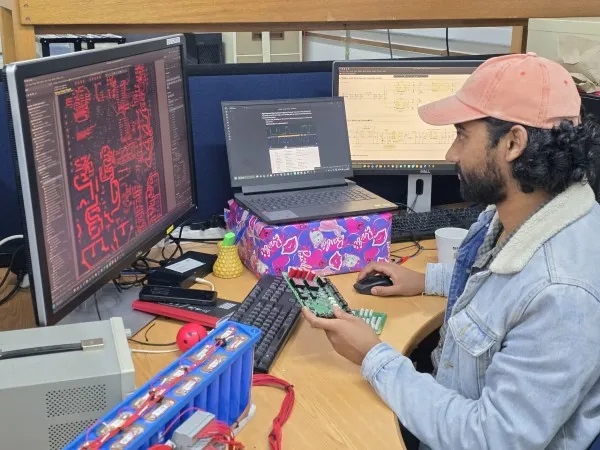
By combining the CSIR's world-class scientific and engineering capabilities with Mega-Titan Power's expertise in battery design, manufacturing and industrial applications, the partnership seeks to accelerate innovation in energy storage solutions for mining, renewable energy, transportation, agriculture and the industrial automation sector. Beyond electronics, the partnership will focus on rigorous system performance and environmental testing to ensure that these energy solutions can withstand the diverse and often harsh conditions found in sectors like mining, agriculture and transportation.
“We have a joint venture with Mega-Titan Power wherein the batteries will be applied in South Africa’s mining and aviation industries,” says CSIR principal engineer Dr Inus Grobler, and adds, “The mining industry prefers localised, standalone battery safety systems that are not reliant on imported components. This is where we are best placed to assist the industry.”
“Currently in South Africa, most battery management system technology is imported. At the CSIR, we have the facilities, capabilities and expertise to design battery management systems and conduct rigorous environmental testing, exceeding industrial standards,” says Hanif Banderker, a senior engineer at the CSIR in Stellenbosch. “Regardless of the cell chemistry selected, in the end it is the electronics that will govern its functioning and keep it in a safe operating condition.”
The CSIR brings decades of scientific leadership to this partnership, with deep expertise in evaluating a wide variety of battery chemistries, including established technologies such as the popular lithium-ion, lithium iron phosphate and lithium titanate, and recently, the sodium-ion and solid-state battery cell technologies. CSIR researchers have published several articles on the subject.
“Lithium titanate remains one of the most robust battery technologies available,” says Grobler. “At the same time, our research into sodium-ion cells is producing very promising results, demonstrating strong performance at a significantly lower cost.”
CSIR Defence and Security research group leader, Etienne Gunther, welcomed the partnership, stating: "Collaboration between research institutions and industry plays a critical role in transforming innovative ideas into practical technologies. This agreement provides an exciting platform for joint research and development activities that can support industrial growth and technological advancement."