Oxygen crash caused lobster walkout, says ocean robot data
The CSIR and its partners captured rare, detailed data during a recent lobster walkout along Africa's west coast, revealing how oxygen levels dropped on the coastal shelf before marine life washed ashore. The observations form part of an international scientific project called the West African Margin (WAM), which aims to monitor oxygen changes in the region and improve predictions that can help protect fisheries, coastal communities and ocean ecosystems.
On 25 February 2026, South Africa’s Department of Forestries, Fisheries and the Environment (DFFE) urged the Elands Bay community not to collect, sell or eat swathes of lobster and fish that had washed up onto this Western Cape beach.
“The time of death of these [animals] cannot be confirmed,” the department cautioned in a public statement, confirming large marine walkouts and mortalities, including significant numbers of West Coast rock lobster (kreef). “Exposure to algal toxins and bacterial contamination poses a serious health risk. Consumption may result in severe illness or death.”
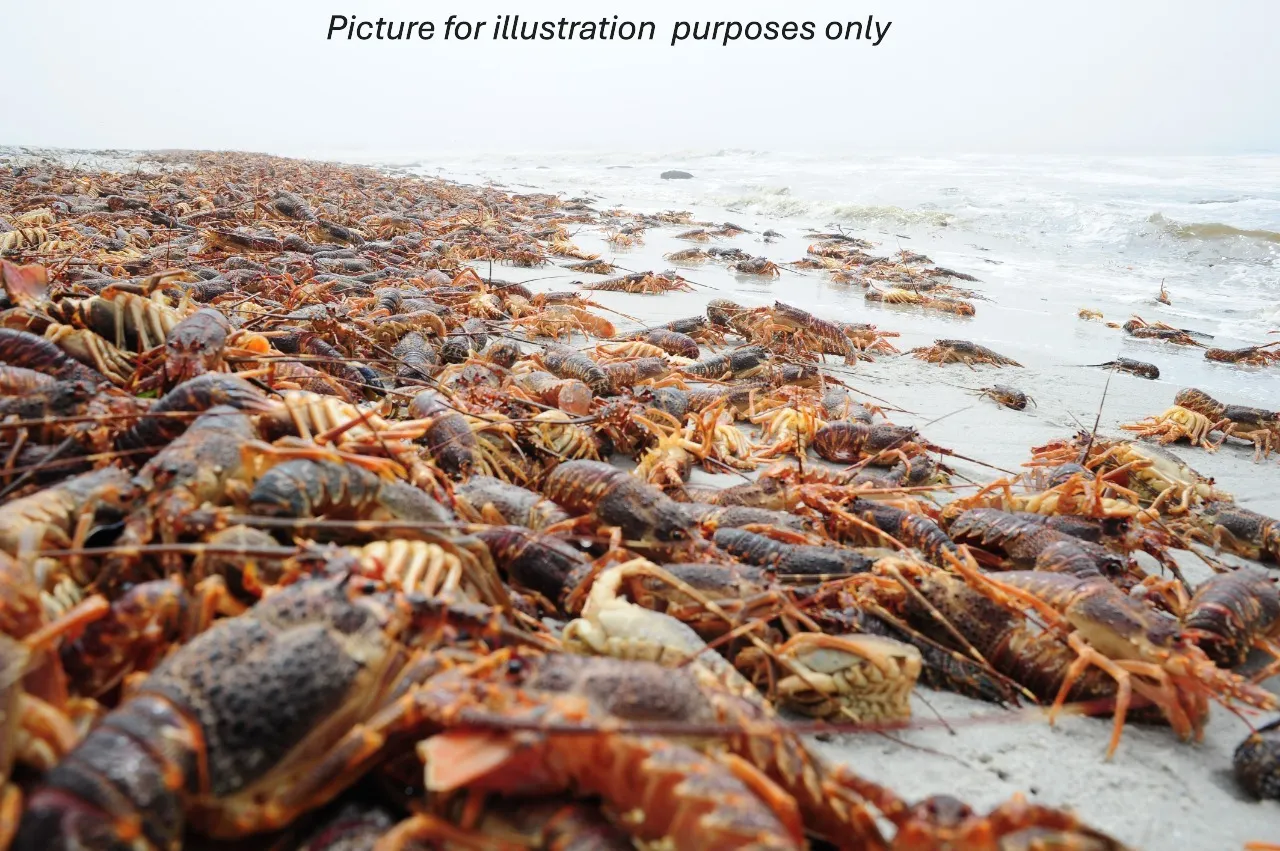
This lobster walkout, like many others along Africa’s west coast, was triggered by a low-oxygen event.
Low-oxygen events can happen upon the collapse of an algal bloom: after a large bloom, the algae die en masse and the bacteria responsible for breaking down the decaying algae consume almost all the dissolved oxygen in the water. This results in "dead zones", where oxygen levels are too low to support many forms of marine life.
But what makes this walkout so significant for science is that the CSIR’s ocean robots were sampling right on the Elands Bay coastal shelf, capturing the underwater conditions as they changed, in great detail, for the very first time.
Dr Sarah Nicholson, a lead oceanographer at the Southern Ocean Carbon-Climate Observatory(SOCCO), which is managed by the CSIR and funded by the Department of Science, Technology and Innovation, explains that two robots work in tandem to collect ocean data: a surface autonomous vehicle known as a wave glider observes the weather conditions and surface ocean properties, twinned with a diving glider that dives vertically beneath it, sampling key variables throughout the water column.
Nicholson says the CSIR partnered with a small business called Sea Technology Services (STS). “While scientists use the data to answer research questions, STS provides the technical expertise needed to prepare, deploy and operate the autonomous gliders, making long-duration ocean observations possible.”
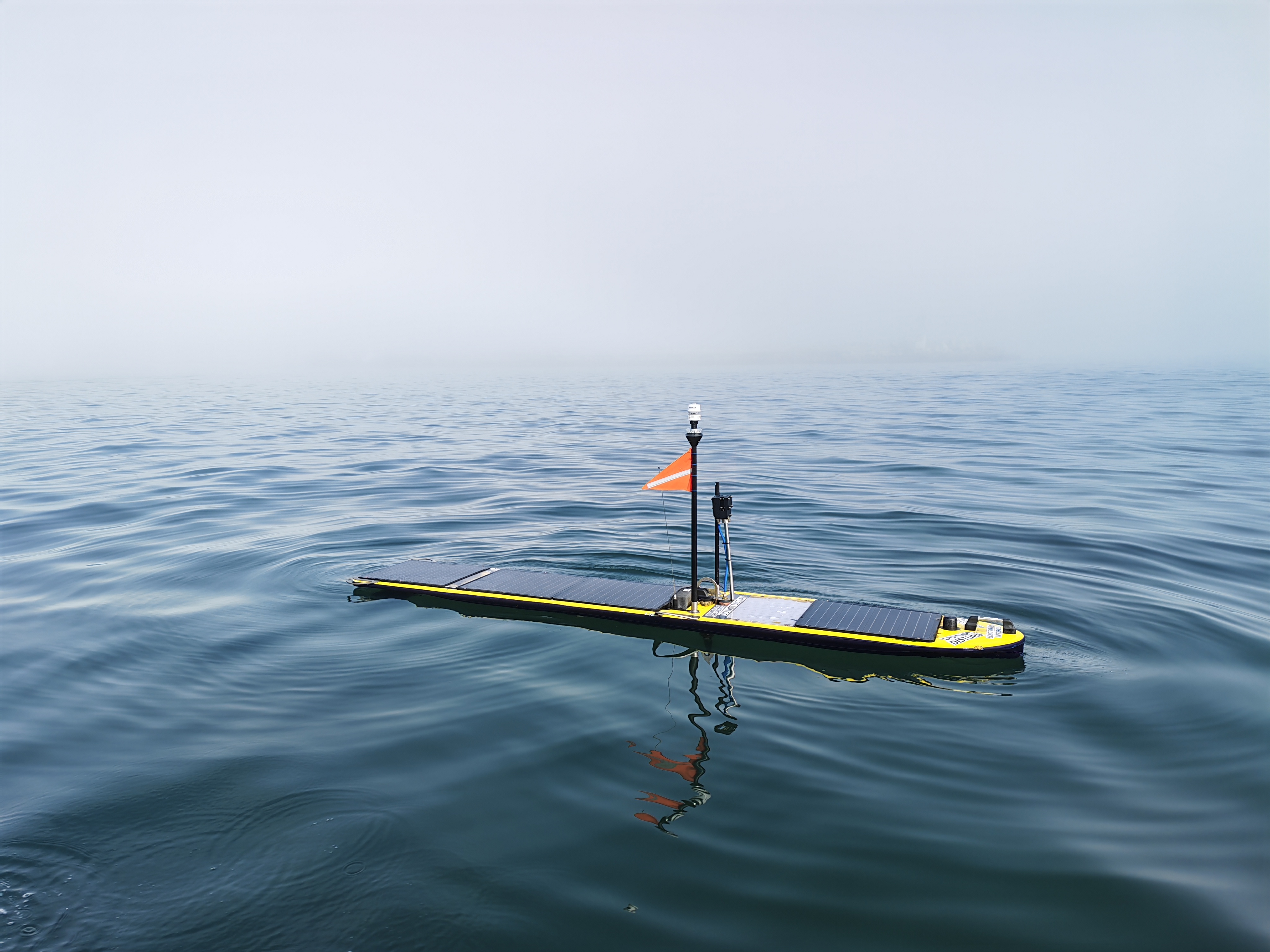
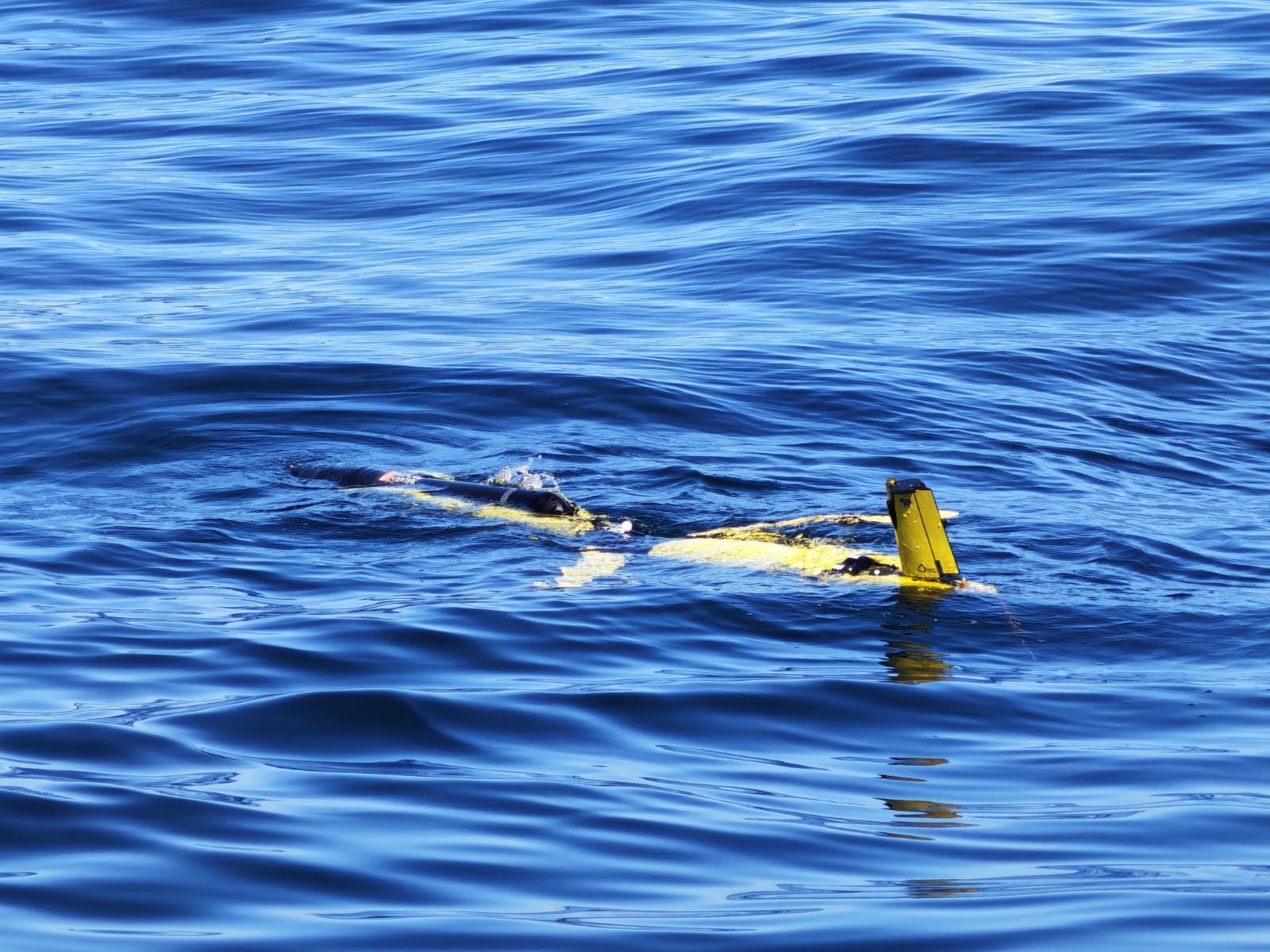
SOCCO’s ocean robotic platforms, in partnership with Sea Technology Services, include a surface autonomous vehicle known as a wave glider that is twinned with a diving glider. The wave glider (left) observes the weather conditions and surface ocean properties, while the diving glider (right) dives vertically beneath it, sampling key variables through the water column.
The key variable for understanding lobster walkouts is the amount of oxygen in the water.
When Nicholson’s team retrieved the data from the glider, they were surprised by just how much the oxygen levels had shifted in the lead-up to the walkout.
“We could see the progression of low oxygen forming on the shelf prior to the lobster walkout and other intermittent wind-driven events, such as upwelling, that reventilates the shelf with oxygenated waters,” says Dr Estel Font, a postdoctoral researcher at SOCCO and the University of Cape Town (UCT), referring to detailed graphs that show the measured oxygen levels against ocean depth and over time.
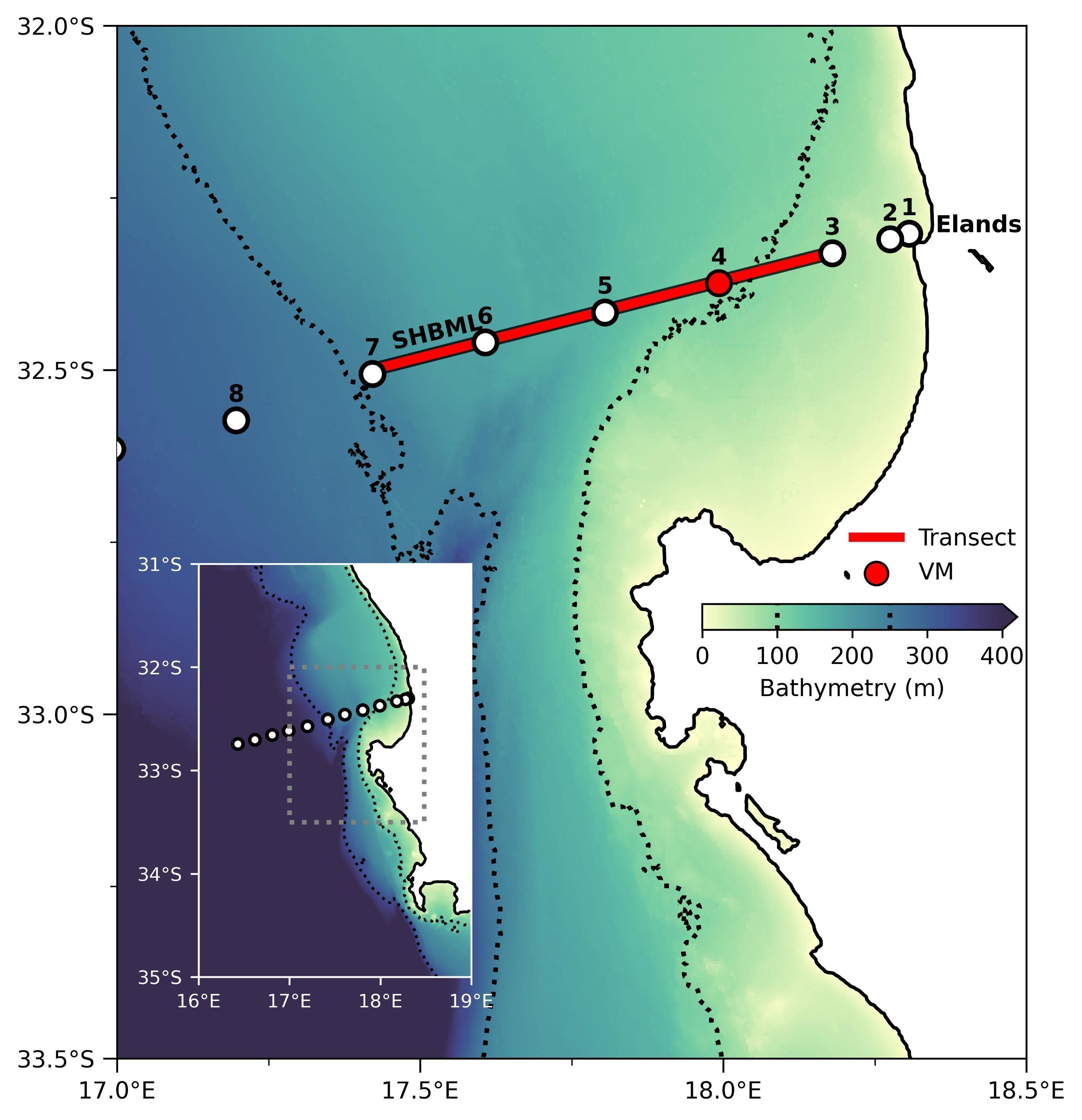
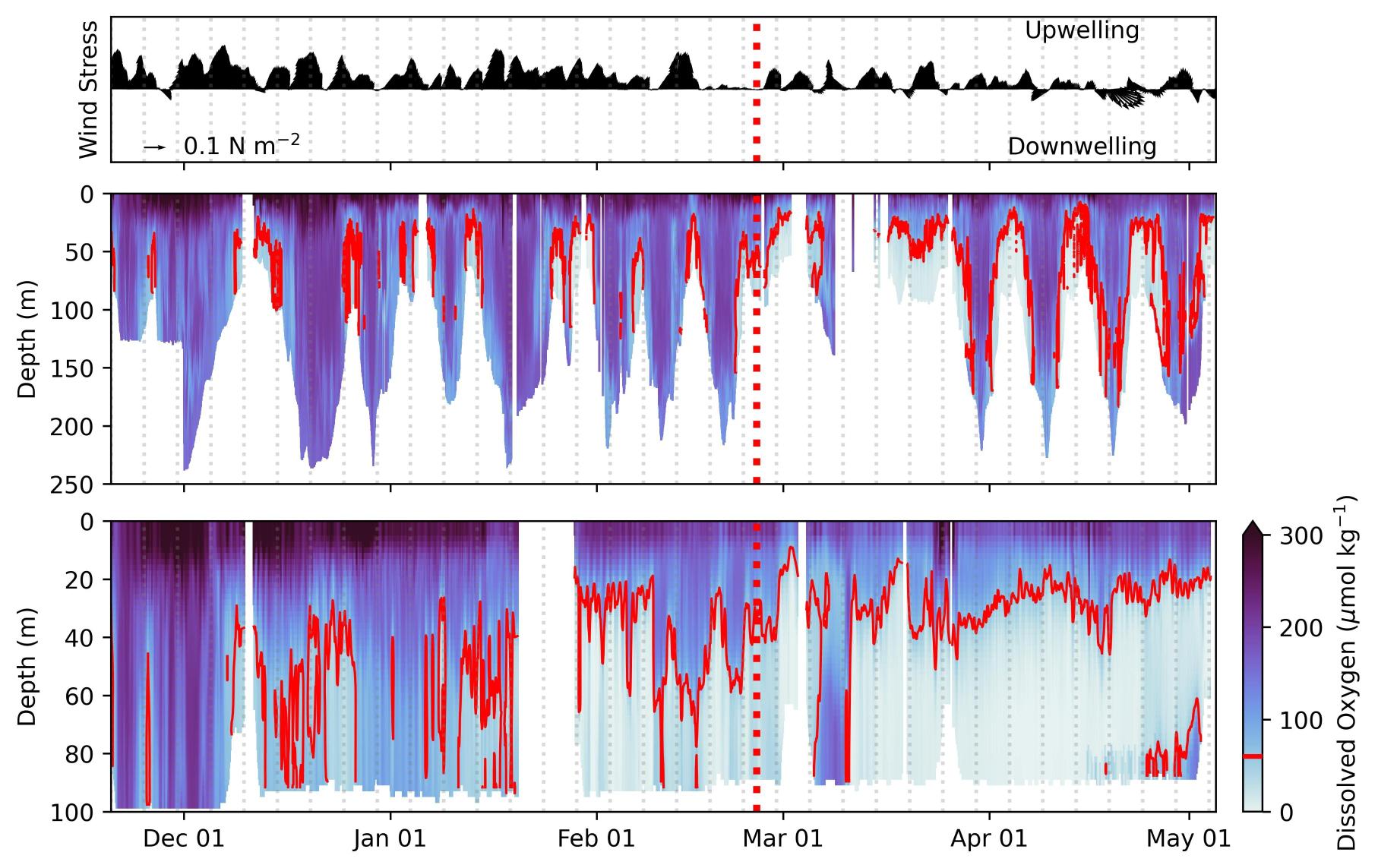
Left: A map showing the sampling route followed by the wave glider and one diving glider, marked in red. These robots moved back and forth between the coast and offshore waters while collecting ocean data. A second diving glider remained at Station Four, where it continuously sampled the water column. Right: A vertical red dotted line marks the Elands Bay lobster walkout event on 25 February 2026 across three datasets. The top graph shows wind stress data collected by the wave glider, while the middle graph shows oxygen levels against ocean depth and over time, as measured by the diving glider that moved between Stations Three and Seven (see map on the left). The bottom graph shows oxygen data collected by the stationary diving glider at Station Four. The red contour lines on the middle and bottom graphs indicate low-oxygen conditions (hypoxia).
“This is the power of autonomous platforms - they can sample scales of variability that we have not yet observed or understood, helping us to understand the processes,” she says. “These glider datasets offer unprecedented resolution and will certainly be widely used by the scientific community.”
The observations at Elands Bay are part of a larger scientific project called WAM, undertaken by the international Ocean Biogeochemistry Virtual Institute and funded by the philanthropic Schmidt Sciences organisation. The aim is to study how oxygen levels and productivity are changing along Africa’s west coast, from the tip of South Africa to the equator, where productive fisheries and marine ecosystems are vulnerable to low-oxygen events.
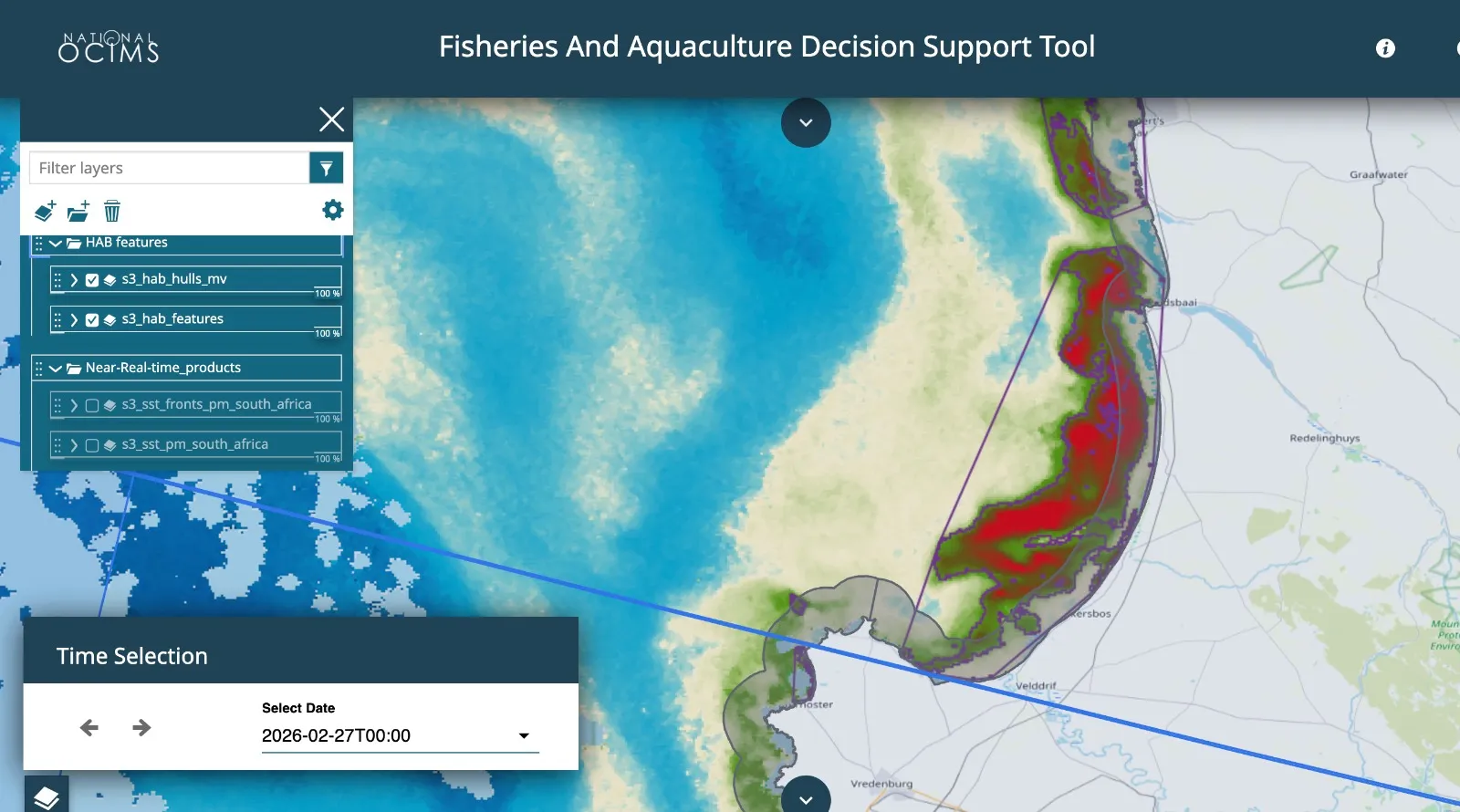
Scientists at SOCCO and UCT have begun monitoring the Southern Benguela upwelling system along South Africa’s west coast using various sensors on the glider robots, as well as satellite data and other measurements.
"Models are struggling to agree on the predicted direction of change, so more observations in these climate-sensitive regions are critical to understanding the processes and whether we will expect an increase in the frequency of these low-oxygen events."
Climate change can reduce oxygen in the ocean in several ways. One pathway is through changes in phytoplankton, the microscopic plants that produce oxygen and form the base of the marine food web. If shifts in temperature, nutrients or ocean conditions affect their productivity, the effects can ripple through the ecosystem.
As seawater warms, it also holds less dissolved gas, including oxygen. At the same time, changing winds can alter upwelling and other ventilation pathways that bring oxygen-rich water into different layers of the ocean. In other words, deoxygenation is not caused by one process, but by several climate-linked changes acting together.
Nicholson says another major WAM deployment of SOCCO’s Ocean Robotic Platform will take place along the Namibian coast in 2028, with Namibia’s Ministry of Fisheries and Marine Resources (MFMR) on board as a formal partner in the project.
“Namibia has been really important in this project, as it is a region prone to very significant hypoxic events,” she says. “MFMR has sustained observations of oxygen over a long period of time.”
Nicholson explains that such historical datasets are critical and help scientists understand how the ocean and its ecosystems are responding to climate change. Long-term, detailed observations improve climate models that predict future environmental change. More accuratepredictions, in turn, can help governments, industries and coastal communities prepare for future impacts and make informed decisions about managing ocean resources.
The job of scientists working on the WAM project, she says, is ultimately to determine whether current global models are missing out on important parameters measured through continuous robotic sensing and ocean observations.
“While traditional approaches, such as observations from ships, provide isolated snapshots, autonomous gliders continuously sample the ocean over weeks to months, allowing scientists to observe variability ranging from small circulation features and the impact of short-lived weather events to seasonal changes,” she says. These observations help identify processes that may be poorly represented or entirely absent from existing models.
“Near the equator, for instance, we know that beneath the surface there is a subsurface oxygen minimum zone, but we do not yet fully understand how short-term physical processes, such as wind forcing, tropical instability waves, seasonal forcing and upwelling, control its ventilation and variability," says Nicholson.
For this reason, her team will ship the robotic gliders to the coast of Ghana at the end of 2026. They will be deployed at two equatorial mooring sites from the RV Falkor (Too), a world-class oceanographic research vessel operated by the Schmidt Ocean Institute.
“We have a team of pilots who are land-based and keep an eye on their computers. The gliders communicate with satellites to send us their location every time they surface and they can send some of their data there and then.”
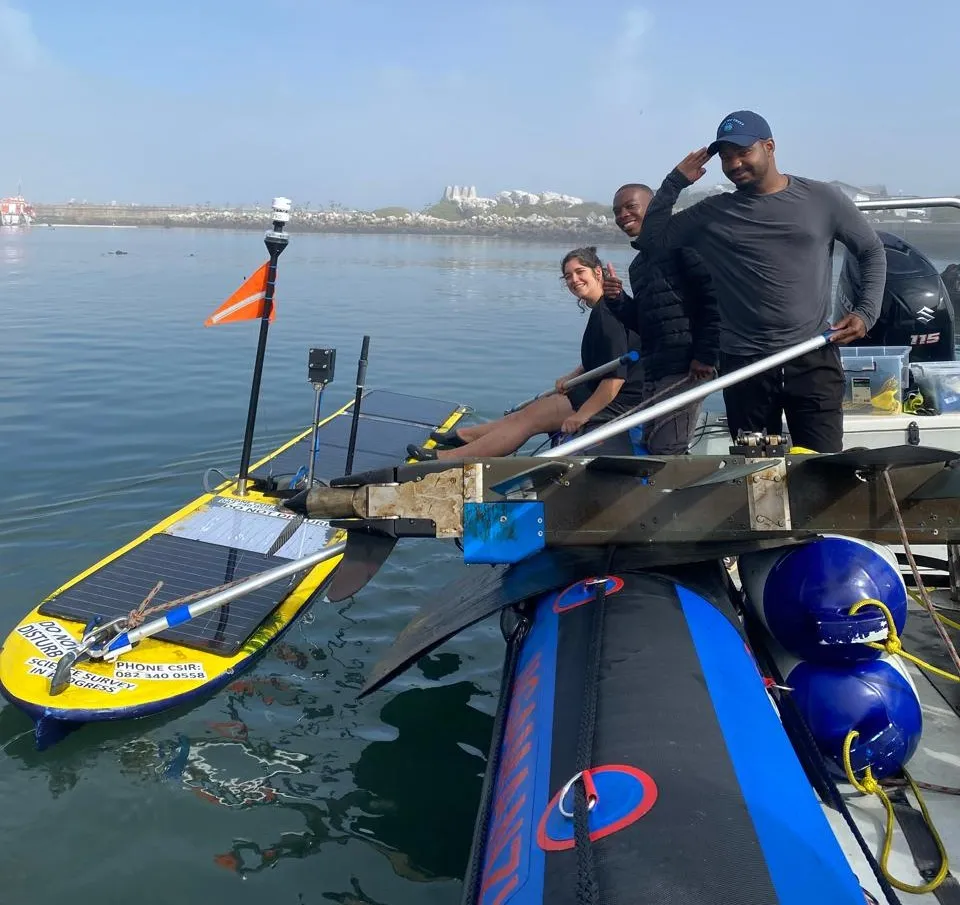
In South African waters, the SOCCO team usually goes out on a small boat each month to retrieve the gliders and recover the rest of the dataset in full. However, in the middle of the equatorial Atlantic, the gliders will remain at sea for four to five months, after which another international vessel will retrieve them. The gliders will also be equipped with long-lasting batteries for their unusually long voyage.
Though it takes a great deal of work to keep the robots functioning in harsh marine environments, she says they are critical to understanding the very different systems off the coasts of South Africa, Namibia and Ghana.
“The approach SOCCO has always taken is to apply a fine-scale lens to understand how these different systems and variability impact the supply of oxygen and carbon to the specific region.”
The data generated by the WAM project over the next few years will be shared with researchers from South Africa, Namibia, Ghana and other African countries, says Nicholson. This will ensure that top-tier African ocean research facilities are able to contribute their expertise to global scientific modelling, as well as support local authorities in managing fisheries and coastal areas.
“If we see that these sorts of hypoxic events are happening more and more in the future, we need to make sure we do not put marine ecosystems under stress by overfishing, for example, and we need to make provisions for communities that depend on the ocean,” she says.
After the Elands Bay lobster walkout, authorities responded immediately with science-based interventions.
According to its public statement, the DFFE relocated the remaining live lobsters to areas with stable oxygen levels, monitored oxygen levels and algal activity, scientifically assessed affected fishing stocks and removed dead animals from the beach to protect communities from health hazards.
Published 22 July 2026