CSIR principal researcher Dr Heidi van Deventer joined scientists, conservationists and policy specialists from around the world to launch the Global Springs Alliance (GSA) and establish a road map for protecting some of the planet’s smallest, most essential, distinctive and threatened groundwater-dependent ecosystems.
The CSIR contributes to local and global biodiversity assessments of aquatic ecosystems in terms of typing and monitoring.
A resolution taken by the International Union for Conservation of Nature (IUCN) in Abu Dhabi in October 2025 elevates natural springs as “super biodiversity hotspots” and promotes urgent action for springs as a global conservation priority. An IUCN Inter-Commission Task Force on Springs was subsequently approved, with Dr Joseph Holway from the Spring Stewardship Institute in the United States of America (USA) as the chair, and Van Deventer as co-chair.
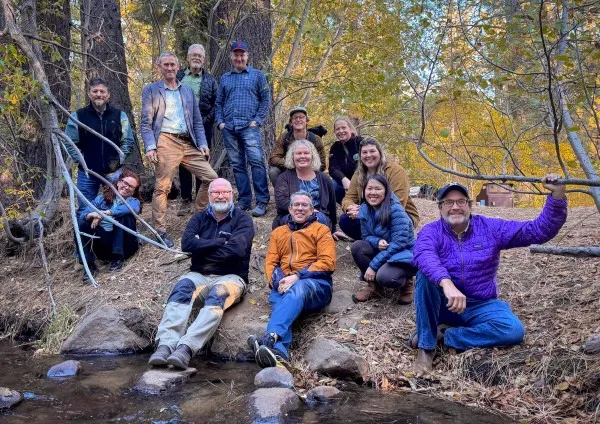
The IUCN Springs Task Force expanded to a number of core volunteers, who had their first workshop from 14 to 16 October 2026 to create a shared understanding of how springs are currently represented within global conservation frameworks and identify critical gaps and opportunities; and to develop a four-year strategic work plan for the GSA to advance the conservation of springs.
The launch included the University of Nevada, Reno, the IUCN Species Survival Commission Freshwater Conservation Committee, Saint Louis Zoo, Springs Stewardship Institute, Shoal, re:wild. and participation by Nevada Department of Wildlife representatives, alongside university faculty and students. Scientists from Mexico, South Africa, Sri Lanka and Australia also attended as core members of the Springs Task Force.
The task force will work with the GSA over the next four years to enhance the IUCN actions of improved representation, assessments and conservation of springs. Van Deventer continues to build knowledge of the complexities of springs and advance the alliance’s priorities. These include identifying global representation and types of springs; irreplaceable springs; assessing their threats and protection levels while also promoting awareness of springs by government agencies and people who benefit from springs.
As hydrological commodities, springs have been largely overlooked despite their wide range in diverse environments, including their ecosystem, economic and cultural provisioning services.
“Many geothermal springs have been transformed and developed as healing centres, already since the late 1800s, whereas very unique springs, like the Isinuka spring in the Eastern Cape, have a unique colour because of minerals, and not because of the biota, compared to systems in Australia and the USA. Many of South Africa’s inland springs also have tremendous spiritual value for indigenous peoples, and their protection should be ensured. The GSA wants to ensure representation of all stakeholders, including those of indigenous peoples and traditional authorities, and will mobilise a cluster in the GSA to attend and coordinate these efforts at a global scale, to ensure values are represented, respected and protected,” says Van Deventer.
Springs emerge as freshwater from the subterranean realm to both the freshwater and marine realms of the IUCN’s Global Ecosystem Typology, which is used for the Kunming-Montreal Global Biodiversity Framework reporting of 2030 and 2050, as well as the Red List of Ecosystems.
Van Deventer points out that these systems are complex, and the connectivity from inland to the ocean is difficult to trace, especially for species that migrate between the inland freshwater springs, freshwater caves and the coastal spring outlets.
Van Deventer’s journey began eight years ago when she led the freshwater assessment of the National Biodiversity Assessment of 2018, in collaboration with the South African National Biodiversity Institute. An initial dataset of inland springs was compiled from the topographical map data and expert accounts, containing about 7 100 locations. Recently, this has been significantly expanded, primarily through collaboration with the Department of Water and Sanitation, as well as other data sources, to more than 24 000 points. Desktop abiotic ecosystem types were modelled and presented at the Freshwater Biodiversity Observation Network and Shoal webinars.
Scant information is, however, available about these ecosystems, which people and animal life are dependent on. These inland springs can serve as sentinels for the risk of over-abstraction of our groundwater resources, particularly during decadal droughts and the increasing impact of climate change. Furthermore, pollution has been observed in these systems, even containing microplastics from inland and airborne sources, reflecting the extended risk of polluting aquatic systems, which are highly connected.
“We are discussing funding applications and proposals to international funders,” says Van Deventer. “This can assist in helping us gather critical information and conduct the necessary in-field validation to confirm the ecological condition and transformation of spring ecosystems. In South Africa, many rural people are highly dependent on productive springs, and therefore they become the critical citizen scientists who would be able to start detecting the changes.”
Published 05 November 2026