Joint Media Statement
Tuesday, 11 August 2026
The Council for Scientific and Industrial Research (CSIR) has officially assumed the responsibility of hosting of Phase 2 of national Active Pharmaceutical Ingredient (API) Innovation Cluster. The launch held on Wednesday, 05 August 2026, marks a significant milestone in South Africa's efforts to strengthen local pharmaceutical manufacturing and improve the security of medicine supply. The cluster is financed and managed by the Department of Science, Technology and Innovation (DSTI) and the Technology Innovation Agency (TIA).
The initiative supports government’s drive to strengthen local medicine manufacturing and improve the country’s health care system by expanding local pharmaceutical production and reducing reliance on imported medicines.
According to the South African Health Products Regulatory Authority (SAHPRA, 2025[1]), “during the last decade, promoting sustainable access to quality and affordable medicines has been of significant concern to African leaders. More recently, the opportunity to promote local, regional and continental production of the medicines needed is considered as part of the overall health systems strengthening package.”
Originally established by the DSTI and TIA in 2020, the API Innovation Cluster was created to strengthen South Africa’s capacity to develop innovative technologies and accelerate the commercialisation of production processes for small-molecule active pharmaceutical ingredients (APIs). By coordinating expertise, research infrastructure and industrial capabilities across the country, the initiative aims to expand local pharmaceutical manufacturing while contributing to economic growth, industrial competitiveness and improved public health outcomes.
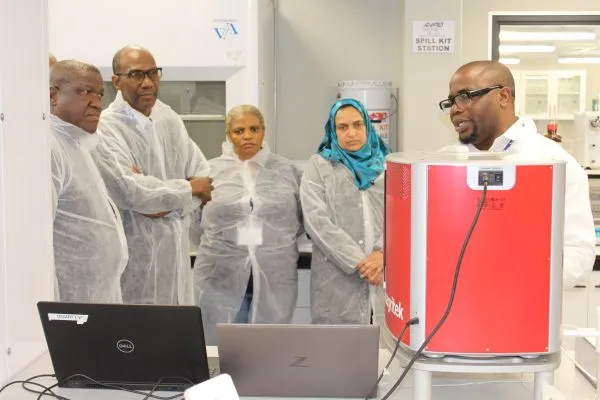
During this phase, the cluster will focus on advancing locally developed API production processes through translational development, enabling promising technologies to progress towards commercial-scale piloting and preparing strong business cases for local manufacturing.
In his opening remarks, CSIR CEO Dr Thulani Dlamini highlighted the CSIR commitment to supporting the development of a capable state by investing in capabilities and technologies that address South Africa’s pressing challenges, while contributing to inclusive economic growth.
“Central to our mandate is the expectation that our work must foster industrial development and contribute to the creation of a capable state which helps to address socio-economic challenges facing our country. In a world characterized by rapid technological change, no single institution can address complex national challenges such as health on its own. Meaningful and timely impact can only be achieved through partnerships that harness complementary expertise, infrastructure and collective ambition.” he said.
Dr Dlamini added that the API Innovation Cluster provides a coordinated national platform that connects academia, government and industry to accelerate innovation in the pharmaceutical sector. The strategic importance of local API manufacturing became particularly evident during the Covid-19 pandemic, which exposed the vulnerability of global pharmaceutical supply chains and highlighted Africa's exposure due to over reliance on imported medicines. Strengthening domestic API production has therefore become a strategic national priority, supporting medicine security, industrial resilience and regional health preparedness.
As the host of Phase 2, the CSIR will coordinate a national innovation network that supports proof-of-concept projects undertaken by universities, including the Universities of Limpopo, Johannesburg, Pretoria and Stellenbosch. The cluster will also support translational development projects through the CSIR's FuturePHARMA facilities and the API+ Laboratory at CPT Pharma, while driving skills development initiatives and strengthening South Africa's pharmaceutical innovation ecosystem.
This initiative aligns with TIA’s strategy to strengthen South Africa’s innovation ecosystem by supporting locally developed technologies, funding prototype development, and leveraging specialised infrastructure and expertise across the country's network of innovation hubs. The cluster model is TIA’s approach for assessing value chains and stimulating the development of activities and interventions to facilitate sector-level or industry-level engagement through a cross-cutting approach. By enabling the localisation of pharmaceutical manufacturing technologies, the initiative aims to reduce import dependency, strengthen regional value chains and enhance South Africa’s position as a pharmaceutical manufacturing hub for the continent.
“TIA technology clusters are collaborative multi-stakeholder vehicles geared to identify and achieve common objectives in a coherent manner to create a knowledge-based economy in areas of national priority by stimulating innovative technology development. The API Cluster will leverage internationally recognised process technologies to develop competitive API manufacturing processes while facilitating technology transfer to local pharmaceutical companies,” said Mr Sibusiso Manana, Acting Executive Bioeconomy, TIA.
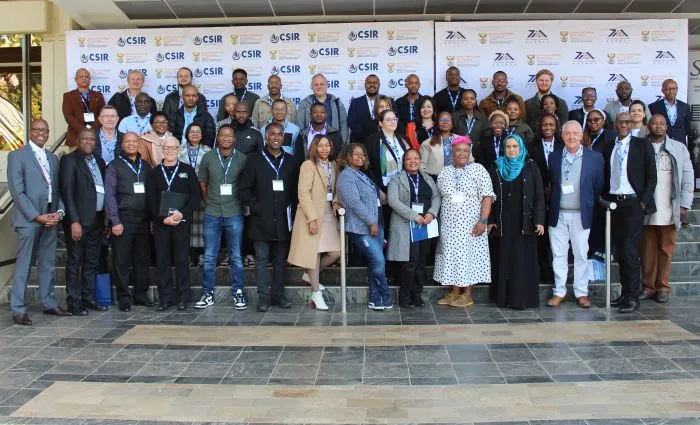
“This launch is a renewed commitment to convert South African science into productive capability, quality jobs and medicines that our people can access and trust. It is also an opportunity to position South Africa as a competitive pharmaceutical manufacturing hub for the continent. This phase of the API Cluster should be defined by partnership and measurable delivery, moving technologies from laboratory to market, building talent and enterprises that will sustain this sector,” Manana concludes.
Looking ahead, Phase 3 of the programme, planned for 2029 to 2031, is expected to focus on Current Good Manufacturing Practice piloting of locally developed API processes and the in-licensing of technologies for commercial production, further strengthening South Africa's pharmaceutical manufacturing value chain.
“The localisation of pharmaceutical manufacturing is a strategic priority for South Africa’s science, technology and innovation agenda. Through continued investment in research infrastructure, partnerships and skills development, the API Innovation Cluster will contribute to building a globally competitive pharmaceutical manufacturing sector that supports economic growth and improves healthcare resilience” said Dr Kenny Tenza, Acting Deputy Director-General for Technology Innovation at DSTI.
The launch represents more than the introduction of a new programme. It demonstrates what can be achieved when science, innovation and collaboration are aligned towards a common national goal. Through this partnership, the DSTI, TIA and CSIR are laying the foundation for a stronger, more resilient pharmaceutical sector that will enhance South Africa's industrial competitiveness, strengthen medicine security and support long-term economic and social development.
Ends
Issued by Strategic Communication
For enquiries, contact:
Phetolo Phatsibi: Practitioner: Media Relations
Mobile: 081 396 887
Email: @email
About the CSIR
The CSIR, an entity of the Ministry of Science, Technology and Innovation, is one of Africa's leading organisations in scientific and technology research, development and implementation. Constituted by an Act of Parliament in 1945 as a science council, the CSIR undertakes directed and multidisciplinary research and technological innovation, as well as industrial and scientific development, to improve the quality of life of all South Africans.
Follow us on social media:
X: @CSIR
Facebook: CSIRSouthAfrica
Instagram: CSIRSouthAfrica
LinkedIn: Council for Scientific and Industrial Research (CSIR)
YouTube: CSIRNewMedia
About the Technology Innovation Agency (TIA)
The Technology Innovation Agency (TIA) is a public entity in South Africa that serves as a key institutional intervention to bridge the gap between the innovation undertaken by higher education institutions, science councils, public entities, and the private sector and the commercialisation of these innovations.
Established in 2010, TIA has a national footprint with offices in KwaZulu-Natal, the Western Cape, and Gauteng. The core mandate of the Agency is to fund and support innovative technologies with strong commercial potential. In addition to financial support, TIA offers a range of programmes that provide non-financial assistance to innovators and small, medium, and micro enterprises (SMMEs).
TIA also acts as a catalyst and enabler of innovation through strategic partnerships at local, continental, and global levels.
Read more at https://www.tia.org.za/who-we-are/.
[1] South African Health Products Regulatory Authority (SAHPRA), 2025. Policy position of the South African Health Products Regulatory Authority on enabling local manufacturing. Policy Number CEO04, Revision 1.0. Pretoria: SAHPRA. Available at: https://www.sahpra.org.za/wp-content/uploads/2025/07/Local-Manufacturing-Policy-revised_23.06.2025_FINAL-version-SIGNED-Fully-signed.pdf (Accessed: 29 July 2026)
Published 11 August 2026