Contributory article by Nicole Crozier
Researchers in a new project supporting the transition to a circular plastic packaging system in South Africa’s food and beverage sector are applying a gender-mainstreaming approach to support inclusive participation across the plastics value chain.
Embedding a gender-just transition
A circular transition is not only technical; it is also social. Changes in packaging design and production systems affect people differently, whether they are workers, business owners, community members or consumers. Plastic Reboot – South Africa therefore applies a gender-mainstreaming approach to support inclusive participation across the plastics value chain.
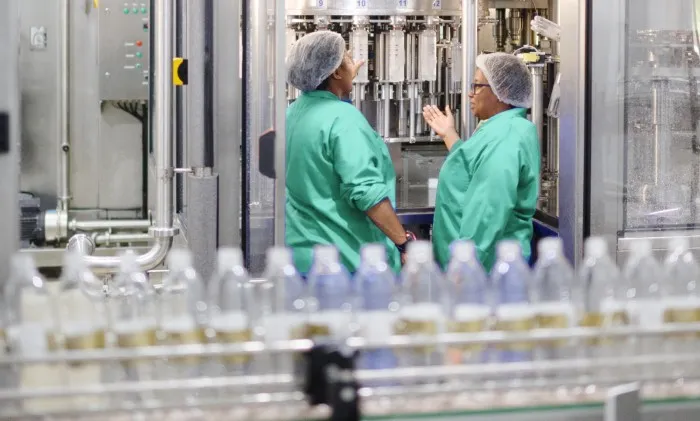
Gender roles shape how people engage with plastic packaging as producers, users and recyclers. Evidence from the 2024 Gender Analysis of the sector shows that women are often concentrated in lower-paid roles and face fewer advancement opportunities in the formal plastics industry. Women typically earn less than men and may avoid landfill-site work because of safety risks in the informal recycling sector.
Recognising these differences helps ensure that circular interventions respond to conditions across the industry rather than reinforcing existing inequalities.
From policy intent to implementation
Plastic Reboot – South Africa integrates gender inclusion throughout the project’s implementation. This includes supporting inclusive stakeholder consultation processes and collecting gender-disaggregated data to inform decision-making. The project builds partner capacity to apply gender-mainstreaming approaches in circular economy interventions.
Gender mainstreaming in this context is not a compliance exercise; It is a practical design approach to ensure that solutions reflect the needs, constraints and opportunities of diverse groups across the value chain. At the same time, it recognises how inequality is shaped by intersecting factors such as race, income, education and employment status.
Enabling adoption through inclusive knowledge systems
Circular packaging solutions are more likely to succeed when they reflect how materials move through households, businesses and recycling systems. Strengthening knowledge systems therefore plays an important role in enabling adoption.
Gender is included in knowledge systems through harmonised project definitions of gender and intersectionality, the use of gender-inclusive language and the dissemination of reports on women and gender in the South African food and beverage plastic packaging value chain. The Plastic Reboot – South Africa team, including the CSIR, has also embarked on gender-mainstreaming capacity building to support the use of a gender lens throughout the project.
A circular plastics future depends on improved materials and technologies, as well as stronger collaboration and inclusive participation across the sector. Through Plastic Reboot – South Africa, the partners and the CSIR are helping to build the knowledge foundation needed to support that transition.
Plastic pollution is a growing systems challenge in South Africa. It is visible in rivers, streets and coastlines. Every year, thousands of tonnes of plastic waste are generated nationally, yet only a portion is recycled. Addressing this challenge requires more than improved waste management; it requires upstream redesign of plastic packaging and stronger coordination across the value chain.
Plastic Reboot – South Africa forms part of the global Plastic Reboot programme funded by the Global Environment Facility and co-led by the United Nations Environment Programme and theWorld Wildlife Fund (WWF) US. The United Nations Industrial Development Organization serves as the international implementation agency, while the Department of Forestry, Fisheries and the Environment is the national focal point. WWF South Africa is the executing agency, working with the CSIR and GreenCape as implementation partners.
Published 8 June 2026