CSIR technician technologist Yondela Mngezana joined an international multidisciplinary team of ocean researchers on the WHIRLSchool project and set sail on a month-long expedition to the Cape Basin, aiming to understand the driving forces behind the survival and prevalence of tiny drifting organisms in oceans and freshwater bodies in the waters of the Cape Basin.
From 25 June to 29 July 2026, WHIRLSchool members took part in a major international scientific initiative investigating how small-scale ocean eddies and whirls in the Agulhas Current System south of Africa impact regional and global climate, marine life and carbon exchange. These fine-scale ocean dynamics play an important role in the exchange of heat and carbon between the ocean and the atmosphere because they influence the ocean’s ability to mitigate climate change, as well as how the ocean is affected by climate change.
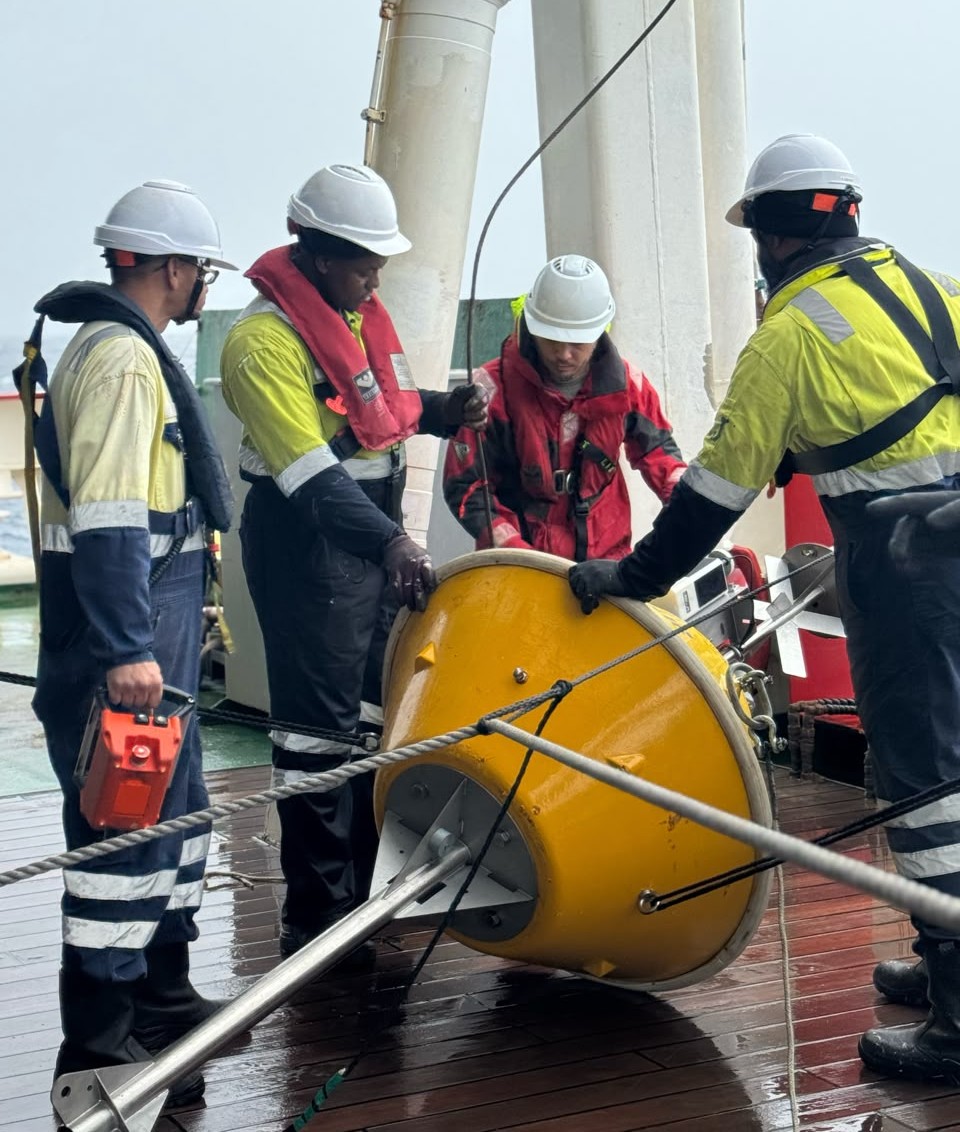
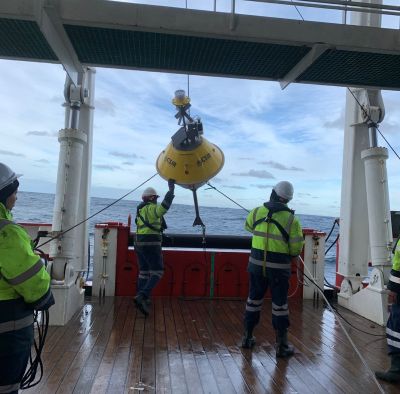
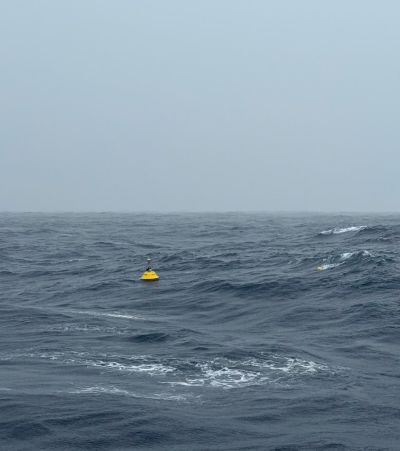
Mngezana deployed the CSIR buoy to assist with sediment trapping
Mngezana’s involvement in the expedition came about when CSIR metocean engineer Sarel Haasbroek, who had initially been scheduled to participate, was unable to join the expedition. Mngezana was subsequently given the opportunity to participate in his place. “Sarel was initially supposed to participate in the expedition, but when he was unable to go, I was given the opportunity to join the team. It was an unexpected opportunity and I am very grateful that I got to be part of it,” Mngezana says.
The chief scientists aboard were focusing on conducting a cross-sectional study on the quality of the stretch of water between the Cape Town Harbour and the Cape Basin. “Everyone aboard had specific research objectives. Some were searching for answers through their research methods to detect microscopic sea plants and animals, while others were seeking to determine the extent of growth or staining present at the bottom of the ocean or at various depths,” she says.
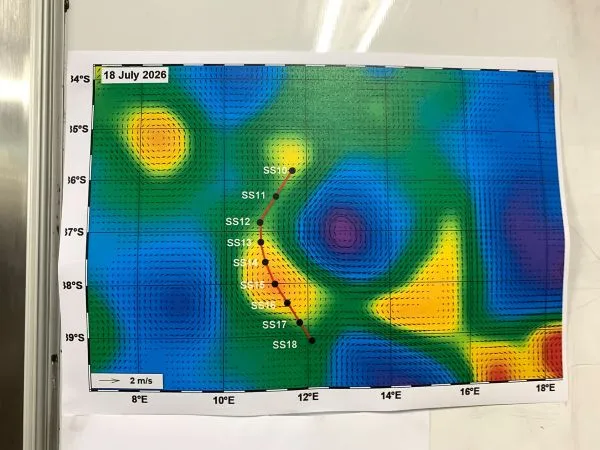
Dynamic ocean environments require high-quality, precise sampling to ensure accurate, actionable data. This required the research vessel to move between sampling locations within the Cape Basin, particularly because carbonate compensation depth can vary depending on ocean conditions.
Mngezana worked alongside the research team during conductivity, temperature and depth (CTD) operations. This involved lowering a rosette of sampling bottles attached to the CTD instrument into the ocean to record measurements such as temperature, salinity and depth as it descended, while the bottles were used to collect water samples from selected depths. The water samples were then brought back to the ship for various chemical and biological analyses, including measurements related to particulate inorganic carbon and particulate organic nitrogen.
In preparation for the expedition, Mngezana and the University of Cape Town (UCT) research team conducted sea trials to determine the placement of marine sediment traps on the CSIR’s buoy and to support its deployment for data collection, which proved successful. “I was involved with the sediment-trap work during the initial part of the expedition, but as the cruise progressed, I became increasingly involved in the broader marine science activities, working alongside the UCT team on their sampling and data-collection activities,” she says.
Retrieving the buoy proved to be challenging and this affected the amount of sediment that could ultimately be collected and shared with UCT students.
WHIRLSchool is an onboard educational programme for students and early-career researchers from Europe and Africa. This year’s field campaign is a collaborative global effort involving key partners from École normale supérieure in France, the University of Gothenburg in Sweden and UCT in South Africa.
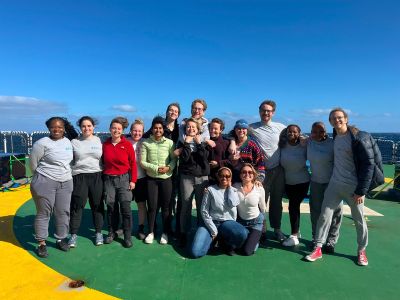
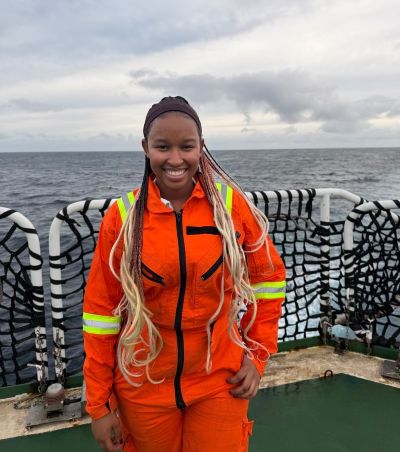
From 25 June to 29 July 2026, CSIR technician Yondela Mngezana joined the WHIRLSchool project research team for an expedition to the Cape Basin, where they gathered marine sediment samples of carbonate compensation depths, the specific depths in ocean basins where the deposition of calcium carbonate sediments transitions from carbonate-rich to carbonate-free sediments.
The research crew experienced fair weather for most of the 33 days at sea, although on some days they encountered intense winds and were exposed to active cyclonic eddies, which are frequent, smaller-scale spinning ocean features (roughly 100 km in diameter) that form primarily along the African shelf and in the lee of the Agulhas Bank.
Collaborating with a global research group of biogeochemists and physical oceanographers specialising in modelling and observations is what Mngezana found interesting. “As an electrical engineer, being exposed to marine science was very new to me. I applied my electrical engineering skills when the buoy’s solar panel was causing problems. I received a lot of help and support during my 33 days at sea and gained experience in a whole new world that I did not know existed,” Mngezana says.
Published 13 October 2026