Bio-plastic covers yield good results in Ghana, Nigeria and South Africa
Reports from farmers in Ghana, Nigeria and South Africa are positive following field testing of a new biodegradable mulch film developed by the CSIR.

Results from Nigeria, Ghana and South Africa’s Eastern Cape province, representing different climatic zones, suggest that the soil covers improve the growth rate of pineapples and tomatoes, potentially leading to early harvest.
Dr Vincent Ojijo, a polymer expert at the CSIR, says the biodegradable mulch film is designed to fully decompose into carbon dioxide, water and biomass, so it does not pollute the environment like traditional plastic films. “As an alternative to conventional plastic soil covers, this new bio-plastic could help farmers grow healthier crops while reducing plastic pollution,” he says.
These films are made of up to 40% locally sourced natural materials, which reduces costs compared to commercially biodegradable mulches. Farmers will be able to use the biodegradable film for short-term mulching of vegetable crops, as well as long-term mulching for crops like strawberries and pineapples.
“Different crops have distinct life cycles, requiring specific solutions,” says Ojijo. He explains that the biodegradable mulch films retain moisture, control weeds and enhance crop growth, just like conventional plastic mulches. However, they offer the added benefit of fully breaking down without leaving microplastic residues.
"In the Nigerian trials, there was significant improvement in the tomato yield for the mulched plots compared to the unmulched sections. This performance was comparable to that of conventional plastic mulch, underscoring potential for their replacement with the biodegradable mulch films," says Prof. Omotola Dada from Elizade University in Nigeria, which collaborated with the CSIR on the trials between 2022 and 2024.
Ojijo says the agricultural sector is facing increasing pressure to adopt sustainable practices, especially from export-driven markets in Europe that demand environmentally friendly farming methods. Biodegradable mulch films offer a solution that aligns with these sustainability goals while reducing the costs associated with plastic waste disposal.
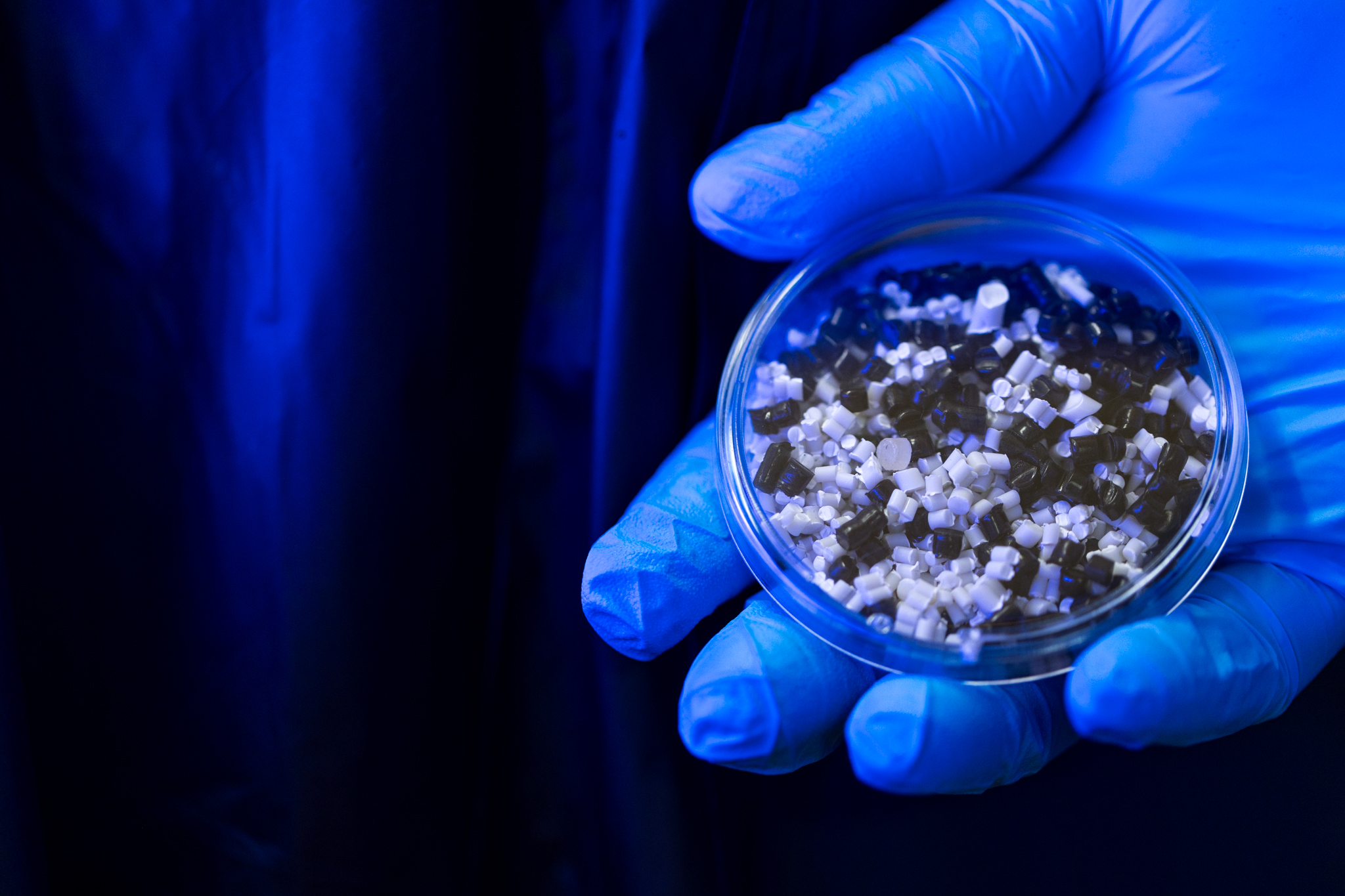


Biodegradble materials that could replace plastic products are developed at the CSIR in Pretoria to provide Africa with practical, sustainable solutions.
“The problem with conventional plastic mulches is their disposal,” he says.
“Farmers often burn them, releasing harmful fumes into the atmosphere. Additionally, these plastics disintegrate into microplastics, degrading soil quality and contaminating water sources.”
Despite the advantages, biodegradable mulch films currently cost two to three times more than conventional plastic mulches. However, Ojijo emphasises that conventional plastics carry hidden environmental costs that are not factored into their market price.
“Plastic pollution imposes severe economic and environmental costs. If policymakers recognise these externalities, regulatory measures such as differentiated levies that account for cost of externalities could help level the playing field,” he says.
The CSIR is now working on licensing the technology to allow for scaled market trials and adoption.
While biodegradable mulch films show great promise, Ojijo says more research is needed to assess long-term soil health impacts. His team at the CSIR is also advocating for further studies on the environmental effects of burning plastic mulches and potential policy interventions to address this.
“We aim to provide farmers across Africa with practical, sustainable solutions,” he says. “By promoting biodegradable alternatives and influencing policy, we can drive the transition towards more sustainable agriculture.”
This agricultural innovation is co-funded by the CSIR, South Africa’s Department of Science, Technology and Innovation and the Foreign Commonwealth Development Office of the United Kingdom.
Published 1 June 2026