Regulated herbal remedies from Zimbabwe and Eswatini ready for HIV patients
A partnership between CSIR researchers, traditional healers, regulators and the private sector has brought three HIV herbal remedies from Zimbabwe and Eswatini to market in the Southern African Development Community (SADC) region.
The project was coordinated by a CSIR-hosted biosciences network for southern Africa (AUDA-NEPAD SANBio), in collaboration with Harare Institute of Technology (Zimbabwe) and the University of Eswatini. The Southern Africa Network for BiosciencesSANBio is a health and nutrition research platform of the African Union Development Agency (AUDA), under the AUDA-New Partnership for Africa’s Development (AUDA-NEPAD).
“These medicines are a success story that demonstrates how Africa can develop and modernise its own medicines and healthcare solutions,” says Prof. Ereck Chakauya, the CSIR-based manager of SANBio and principal investigator for the project.
The three medicines – branded Mutombo, Menivir and Veroveta – are based on the traditional knowledge of herbalists from Zimbabwe and Eswatini. They have been using plant-based remedies for over 10 years to assist with HIV and AIDS management alongside antiretroviral therapies.
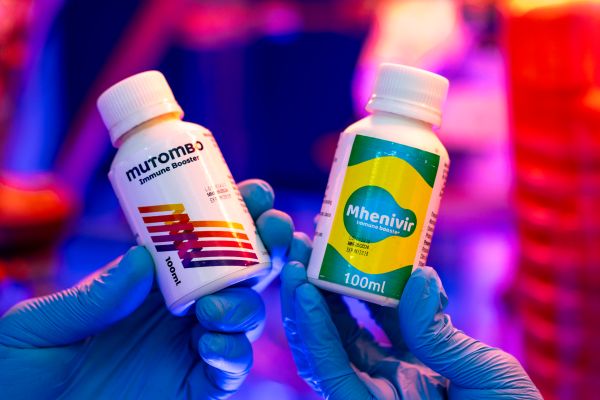
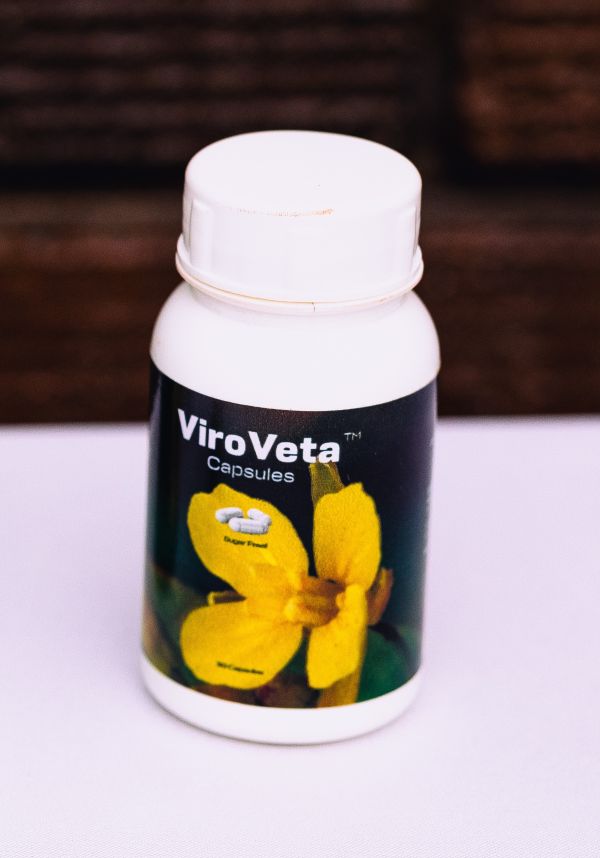
Mutombo Immune Booster, Mhenivir and Viroveta are based on traditional herbal knowledge from Zimbabwe and Eswatini, where plant-based remedies have been used for over 10 years to support HIV and Aids management alongside antiretroviral therapies. These remedies were developed as part of a project coordinated by AUDA NEPAD SANBio, hosted at the CSIR.
“While most herbal medicines may not treat the disease itself, they help manage the symptoms and opportunistic infections,” says Chakauya.
“The reality on the ground is that communities often choose herbal products because they have minimum side effects and research supports reduced resistance by the virus compared to single-molecule medicines. This is especially important in the era of antimicrobial resistance."
Harare Institute of Technology’s Dr Amos Musengi, the principal investigator for Zimbabwe, says it was therefore key to identify traditional healers with a good track record of handling HIV/AIDS infection cases. “The Traditional Medical Practitioner’s Council of Zimbabwe proved quite invaluable in providing credible and experienced traditional healers who met our set criteria.”
Musengi says the exchange of traditional and scientific knowledge between researchers and healers was one of the most rewarding aspects of the engagement.
“One of the knowledge holders routinely used a greenhouse for enhanced sun-drying of her ground plant materials before storage. We quickly discovered that while there were elevated temperatures in this environment, there was a persistently high relative humidity due to inadequate aeration, with the concomitant manifestation of mould,” he says.
“Thus, in explaining these phenomena to the knowledge holder, she quickly appreciated the recommended suggestions, implemented them and realised an improvement in her processes.”
Chakauya says that every medicine developed by the CSIR and its partners undergoes rigorous testing for safety, efficacy and quality and must be approved by the relevant regulatory authorities in each country where it will be used.
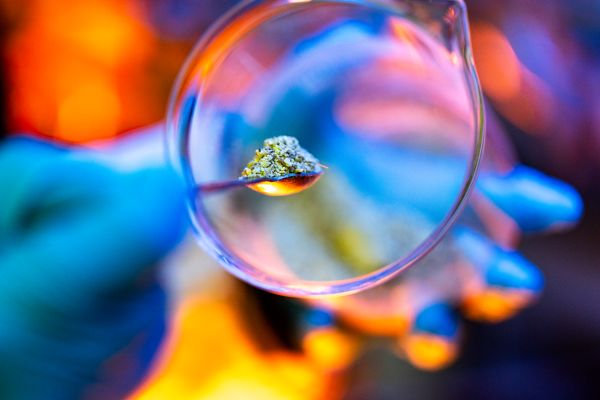
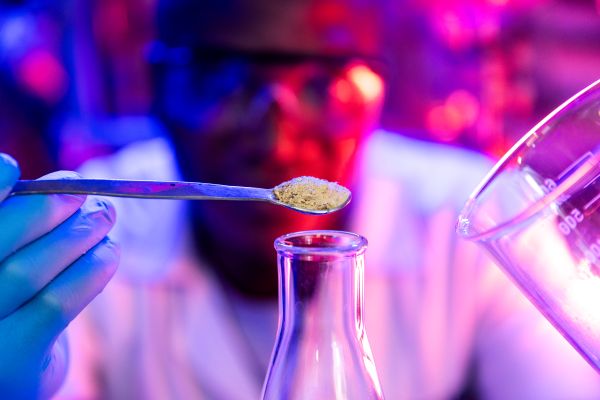
Plant powder formulated through milling for use in the solvent extraction process (left). CSIR analytical chemistry intern Makera Maloba measures the plant powder before adding solvent (right). Every medicine developed by the CSIR and its partners undergoes rigorous scientific testing for safety, efficacy and quality.
For these HIV/AIDS remedies, the teams ensured that the medicinal plants would be harvested sustainably, with the prospect for further propagation and that communities complied with the Nagoya Protocol on Access and Benefit-sharing (ABS).
“We signed agreements with communities to ensure the ethical use of their knowledge and that they are fairly compensated,” says Chakauya. “In this way, it is not just about the scientists, but it is about the community and the benefits, resources and money.”
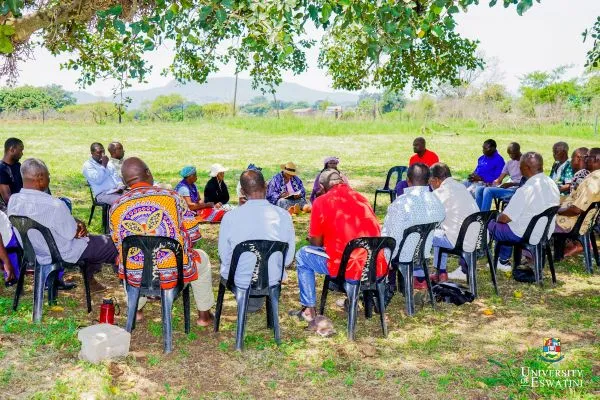
Dr Gugu Sibandze, director of the Eswatini Institute for Research in Traditional Medicine, Medicinal and Indigenous Food Plants, says the ABS binds the University of Eswatini to ensure that communities participate fully in the value chain when the herbal medicines are commercialised.
“The plan is to train the communities on how they can grow the plants themselves in their fields, which will not only provide a sustainable and ethical source of the raw materials, but will also empower the communities,” she says.
“The University has continued to engage communities and transfer skills on how to sustainably use plant genetic resources without depleting wild populations. In its research farm, the university is currently producing seedlings of the indigenous plants, which will then be grown by the locals in the communities where they were originally sourced.”
In Eswatini, the ABS agreement was significant because it was one of the first instances where work linked to biodiversity and traditional knowledge was formally reported back into the Convention on Biological Diversity system through a real project that could demonstrate how policy translates into practice.
Chakauya says this kind of tangible implementation matters because countries may have ABS policies on paper but neglect follow-on projects that show how they work on the ground. He adds that a non-governmental organisation was involved as a beneficiary linked to securing plant material for the process in Eswatini, while in Zimbabwe, partners continue to focus on the manufacturing pathway.
The medicines’ production process was established according to commercial good manufacturing practice and transferred to a private drug manufacturing company capable of generating all the necessary regulatory data.
“In essence, we developed a viable business model for community-based herbal products and these medicines are now in the process of regulatory approval by the competent authorities,” he says.
The SANBio programme aims to eradicate poverty, promote sustainable growth and development, integrate Africa into the global economy and accelerate the empowerment of women.
“Our approach relies on science diplomacy through cross-disciplinary collaboration, mutual benefit and academic exchanges to leverage Africa’s wealth of indigenous medical knowledge and rich biodiversity,” says Chakauya.
He explains that the network’s experience with the HIV herbal remedies project – funded by the SADC Secretariat – has led it to advocate for an African health research agenda. This agenda should include a fit-for-purpose intellectual property regime to protect local medicines, as well as country-specific and comprehensive pharmacopeias with inventories and guidelines on the medicinal properties of Africa’s rich flora and fauna.
“What this project also demonstrates is that there are adequate research and development institutions in Africa, there are private companies that we can partner with to manufacture quality products and there are mature regulatory institutions – such as the African Medicines Agency – to ensure that medicines are accessible and safe,” he says.
Chakauya explains that the HIV herbal remedies project expanded on earlier SANBio efforts to develop frameworks for indigenous knowledge systems, including model approaches to responsible research, ethics and policy tools. He describes the remedies project as a concrete next step, moving from policy frameworks and ethical guidance to a tangible product-development pipeline.
Looking ahead, he says SANBio is working with partners in the region toward a SADC regional indigenous knowledge systems (IKS) roadmap. It will link to intellectual property considerations so that countries can collaborate and strengthen protection and development of local medicines.
“The IKS programme has been given support by science ministries to work closely with SADC Secretariat to develop an IKS strategy and roadmap that can support commercialisation of similar products and raise funding for a scale-up program across the region,” says Chakauya. He adds that related work under the Department of Science, Technology and Innovation in South Africa will explore a regional bioeconomy strategy for the wider SADC region.
In Zimbabwe, Musengi hopes for long-term national and regional policy shifts. “Looking to the future, it is now our sincere desire that the project outcomes contribute toward informing national policies on areas like traditional medicine integration into modern or conventional healthcare systems, indigenous knowledge protection and herbal medicine regulation.”
The CSIR, the University of Eswatini, through the Eswatini Institute for Research in Traditional Medicine, Medicinal and Indigenous Food Plants and the Harare Institute of Technology in Zimbabwe were supported in the HIV herbal remedy work through a grant from the Southern African Development Community Support to Industrialisation and Productive Sectors, or SADC-SIPS, programme.
More information on https://www.csir.co.za/what-we-do/agriculture-and-food/indigenous-knowledge
Read more about the CSIR's footprint in Africa in our Allies in Africa story selection, in celebration of Africa Day 2026
Published 26 May 2026