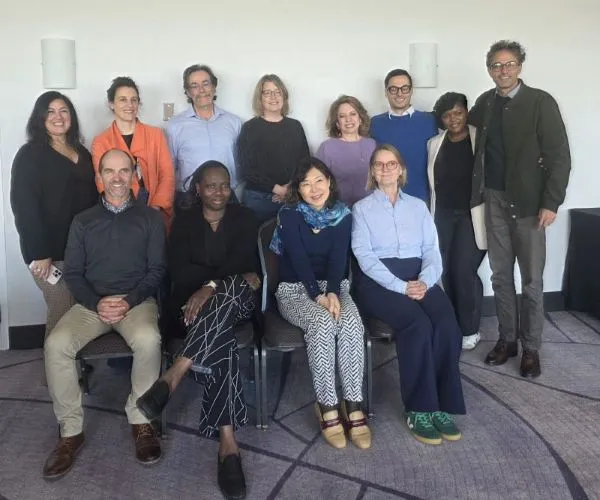
CSIR senior environmental scientist Abulele Adams joined over 1 000 researchers, practitioners and impact assessment practitioners from more than 80 countries across academic, industry and government spheres at the 45th annual conference of the International Association for Impact Assessment (IAIA) in Québec, Canada, from 19 to 22 May 2026.
South Africa is at the forefront of Africa’s renewable energy transition, shifting from its reliance on coal to cleaner energy sources such as wind, solar and green hydrogen. This abundance in the renewable energy mix is often met with multifaceted appeals, as the country grapples with balancing a growing energy crisis with environmental regulations and socioeconomic upliftment. The topic is a passion for Adams, who is currently a PhD candidate at Stellenbosch University’s Centre for Sustainability Transitions.
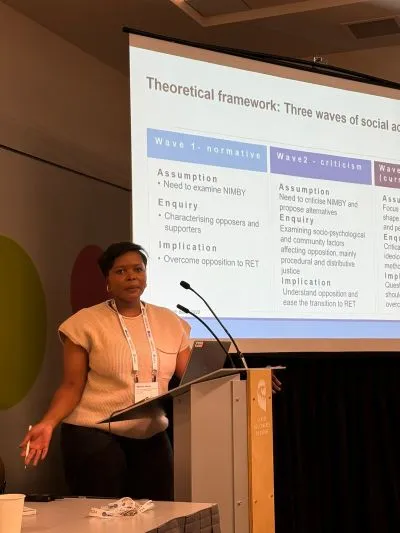
At the conference, Adams presented preliminary results from a paper forming part of her PhD titled, “What is the opposition about anyway? An analysis of renewable energy appeals in South Africa from 2011 – 2025”. The findings highlight seven themes linked to renewable energy appeals, with appeals based on environmental impact assessment procedural shortcomings and environmental impacts being the most submitted.
In her talk, Adams pointed out that environmental management and social impact assessments are crucial for sustainable project development in South Africa’s plans to reshape its renewable energy sector to attract investment and position itself as a leader in green industrialisation.
“My study aims to understand the main reasons behind renewable energy project appeals in the context of the energy transition and planning for more energy projects,” she says.
Appeals related to visual impacts are prevalent in the Eastern and Western Cape. “Interestingly, there has been an increase in developer-led appeals on projects based on wake effect impacts,” Adams explains. Wind theft is a growing area of study around the world and is a phenomenon in which an upstream wind farm extracts energy from the wind, leaving slower, weaker air for downwind wind farms. As a result, downwind power producers can lose their expected electricity output.
“The outcome of the wake effect is one of the key themes for appellants and is attributed as one of the primary reasons appeals are upheld. This significant insight, considering there are plans to scale up wind energy development in line with the Integrated Resource Plan (2025),” Adams explains.

Adams attended the IAIA board meetings on 23 and 24 May 2026. “A highlight I enjoyed at our meeting was reviewing the IAIA strategy with members. However, this is my final year serving as director on this international board.”
Throughout the “Misinformation, Disinformation, Communication and Impact Assessment”-themed IAIA conference, delegates participated in technical sessions that focused on rebuilding public trust in environmental assessments, using digital tools and addressing the challenges encountered in applying fact-based scientific methods to minimise project impacts while engaging with communities. They also participated in training courses, site visits to projects in the region and networking events promoting and advancing best practices in environmental assessment.
Published 23 June 2026