CSIR leads gender-inclusive climate action alongside vulnerable communities
The footpaths are crumbling dam walls in the rural south of Zambia. Villagers lead their cows and goats across the water as grazing grasses come and go. Their homesteads dot the floodplain, zinging in today’s heatwave, but bracing for tomorrow’s cloudburst.
“You could see the danger posed by dams in that state let alone the distance between the houses and the dam and you could just imagine heavy floods hitting that area,” says Dr Shingirirai Mutanga, a CSIR ecosystem and climate researcher. “The impact would be severe and the worst-case scenario is not damaged infrastructure. It is death.”

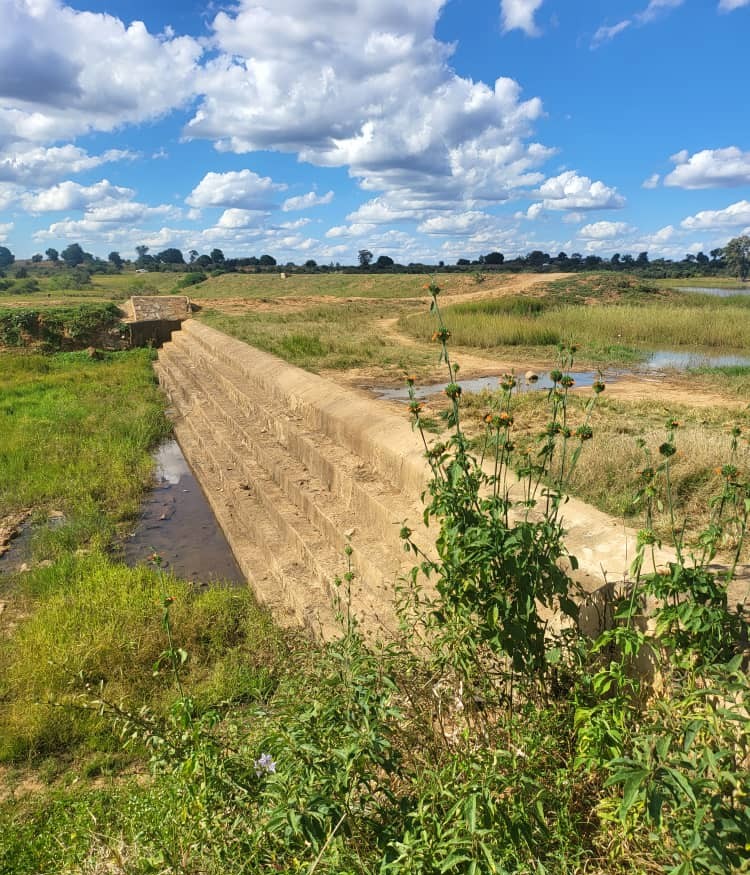
A multidisciplinary research team assessed the state of several dams in Zambia’s Magoye catchment to identify specific interventions that would secure water and reduce flood impacts for nearby vulnerable communities. The spillways of many dams were found to be too low, posing a flood risk if dam waters were to rise.
Mutanga leads a team of CSIR experts brought in by Zambia’s government to bolster the region’s resilience to extreme and unpredictable weather events. The team's skills span climate modeling, hydrology, meteorology, financial modelling, resource economics, and dam and irrigation engineering. The CSIR is working in partnership with local company Sich Enviro-energy Engineering Solutions, as well as Zambia’s Ministry of Water and Sanitation Development through the Ministry of Green Economy and Environment.
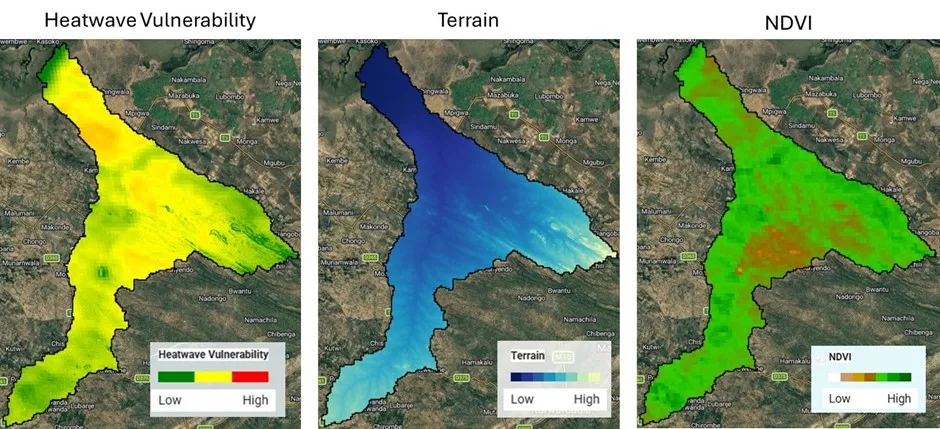
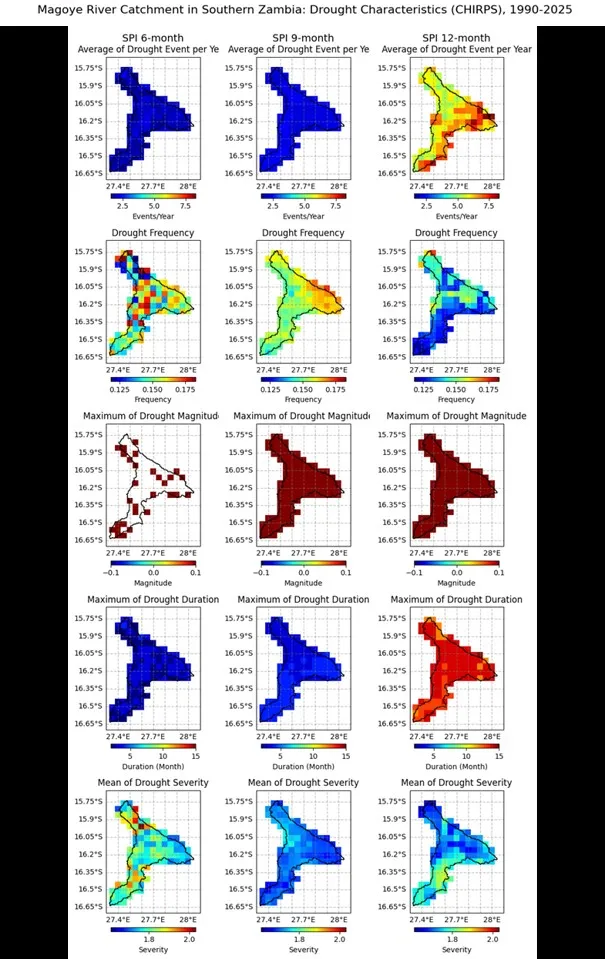
The project they are working on is rooted in Zambia’s Lower Kafue Basin, in the Magoye River Catchment in the Southern Province. After a deep study of the area’s climate, people’s vulnerability and various adaptation options, CSIR researchers and partners began with concrete interventions like dam rehabilitation and irrigation schemes at the Chiyobola and Mainza Dams in the Monze and Mazabuka districts respectively.
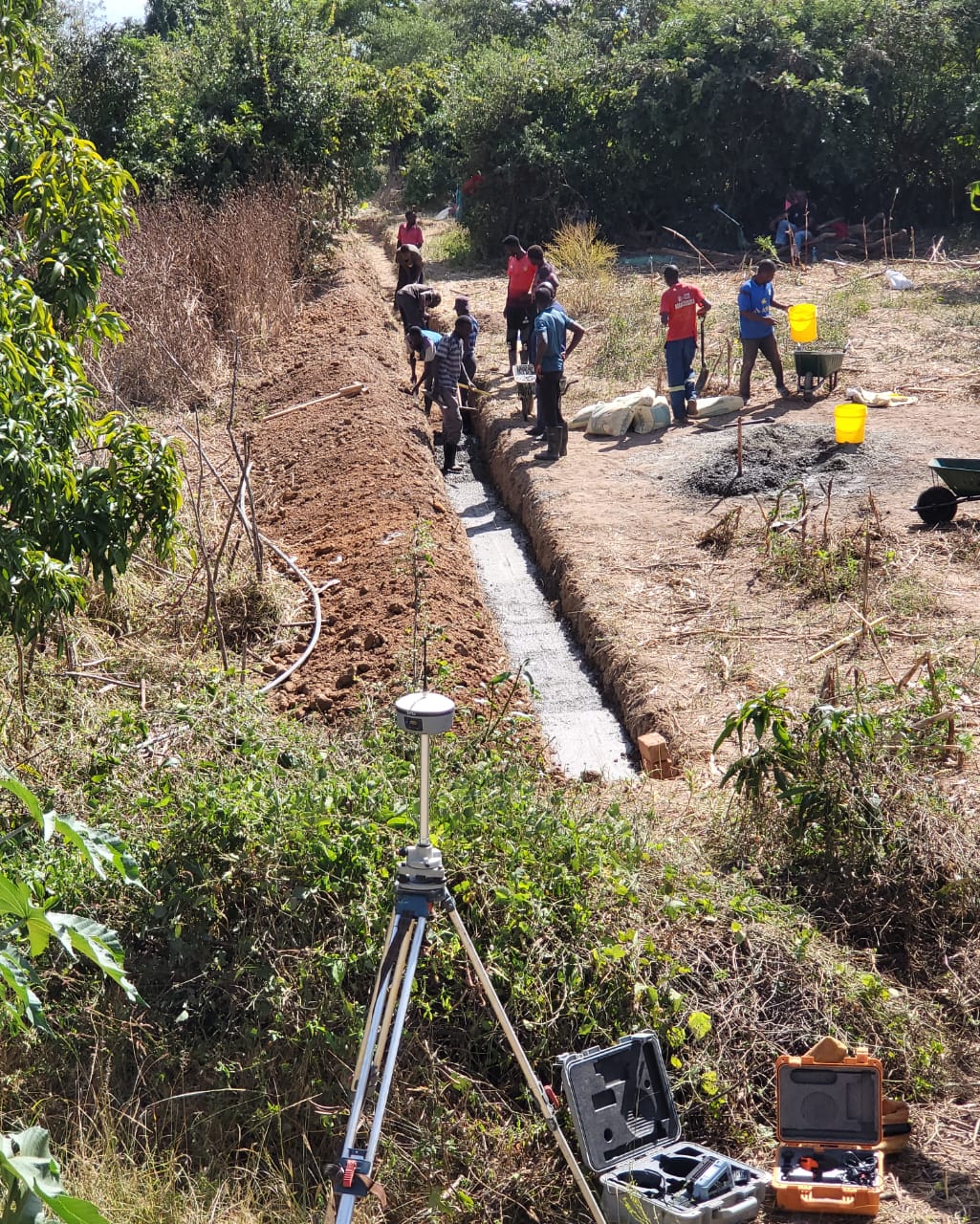
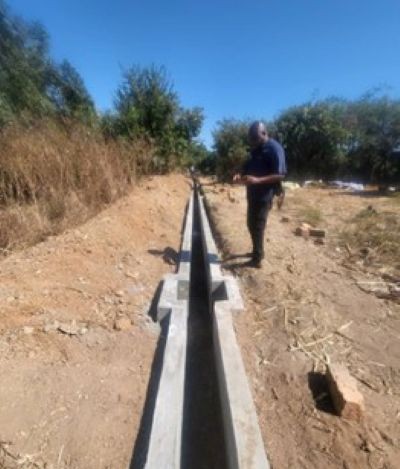
Community members begin construction of an irrigation canal at Chiyobola Dam in the Monze district of Zambia’s Magoye catchment (left). Once completed with concrete, the canal will secure water for farming (right), covering more than one hectare of irrigable land.
Mutanga describes the basin as a landscape of farms, grazing land and small reservoirs that communities depend on for irrigation and livestock. The catchment spans several districts and supports an estimated population of 117 462 people. The river feeds into the Kafue system that underpins key parts of Zambia’s economy, from agriculture to fisheries and hydropower.
It is one of Zambia’s most water-stressed areas, where women are particularly vulnerable to water shortages and climate disasters.
The interventions by Mutanga’s team fall under a project called Zambia: Gender-responsive Integrated Water Resources Management for Water Security and Livelihood Improvement.It is funded by the Nationally Determined Contribution (NDC) Partnership, a support unit hosted by the United Nations.
The NDC is every country’s climate pledge under the Paris Agreement, a legally binding international treaty designed to limit global warming. The NDC Partnership is a global coalition of more than 260 members that helps countries turn their national climate plans into action on the ground, linking needs with resources.
In 2025, Zambia launched its third NDC, which underscores water security and sustainable agriculture as critical cornerstones and the backbone of rural livelihoods. Unfortunately, water supply and farming are acutely vulnerable to climate change. The current project is therefore an initiative from the Zambian government to improve water security for vulnerable communities in the lower Kafue Basin in a gender-inclusive way.

The Zambian government recognises that integrated water resources management is central to adaptation, says Mutanga. Its third NDC commits to rehabilitating 600 000 ha of degraded catchments, expanding water-quality monitoring sites from 1 000 to 1 800 by 2030 and safeguarding 50% of flood-prone households by 2030, scaling to 75% by 2030. These actions are meant to enhance water reliability and reduce hydrological shocks. An estimated 25 small dams are earmarked for construction, 468 groundwater aquifer resources are mapped and protected, 1 650 exploration boreholes are drilled and 41 well fields will be identified by 2030.
A technical assessment by its water ministry also found that about 90% of dams in the catchment require urgent rehabilitation, with common issues including eroding embankments and spillways, seepage, vegetation encroachment and animal burrowing.
These dams are not big concrete showpieces with neat spillways. They are small, made of earth and rock, patched and re-patched.
Mutanga says the CSIR came on board not just to assist with dam and dam wall rehabilitation, but to advise on early-warning systems, scenario planning, sustainable funding models and irrigation schemes.
“We have been playing a coordination role and providing technical support, while our Zambian partner agency focused on the social and gender dimensions,” says Mutanga.
The team narrowed in on two small dams in the Magoye River Catchment, where rehabilitation could deliver the greatest benefit within the available budget and timeline. They wanted to demonstrate workable design, safety and community-use outcomes, which could then be replicated across other small dams in the catchment.
CSIR experts generated local climate models to aid planning and came up with innovative finance mechanisms to help communities and the government sustain dam maintenance and catchment protection over time. Alongside technical training, officials and communities were advised on linking local funding mechanisms with wider climate finance opportunities.
Mutanga says the training sessions also emphasised gender mainstreaming in water governance.
“About 80 people from the different districts were trained by our team and their feedback was very positive,” he says. “I think there is an attraction to the project because these people are experiencing climate change, so any opportunity that comes their way for support in how they can respond and adapt is well received.”

As the project nears its end, Mutanga’s team is pushing to finalise the dam rehabilitation and to connect the dams through irrigation canals, enhancing access to water for the surrounding communities. These simple, community-built channels bring water closer to where it is needed for subsistence farming.
“We have worked in tandem with the communities and the technical engineering team from the water and sanitation ministry to drive the implementation on the ground,” says Mutanga.
“For me, to be honest, this project has been an eye-opener. As scientists, we are often used to developing climate and hydrological models behind the desk and ending there. Bringing science to action on the ground is seldom undertaken, so you have to ask, how does it apply to the people? If there is a flood, people most affected do not have money to go to the hospital nor medical insurance, so they are the most vulnerable to harsh climate conditions. It forces us to think outside the box about how we support and help them.
“They do not need to know how climate models are built, but they do need to be aware that if the science is telling us our dam is in danger, they must take control and take responsibility for the dam’s upkeep,” says Mutanga.
He adds that this local intervention is just the beginning of a national trajectory in Zambia.
Zambia’s third NDC elevates water security and sustainable agriculture as cornerstones of rural livelihoods, while national plans set out actions such as rehabilitating degraded catchments, improving water-quality monitoring and protecting households exposed to flooding. By grounding those ambitions in real sites like the two small dams in the Magoye River Catchment, this project helps translate policy into practical resilience.
Published 1 June 2026