Space science needs software engineers, data scientists and Geographic Information System (GIS) developers in equal proportion to physicists and engineers was one of the key messages at this year’s Space Infrastructure Hub Public Lecture held at North-Link College’s Bellville campus in Cape Town on Wednesday, 19 August 2026.
With bold ambitions to transform and diversify the national space sector, the introductory engagement was held by a selection of entities of the Department of Science, Technology and Innovation (DSTI) to spark open conversations and talks on space science with students at the public Technical and Vocational Education and Training (TVET) college.
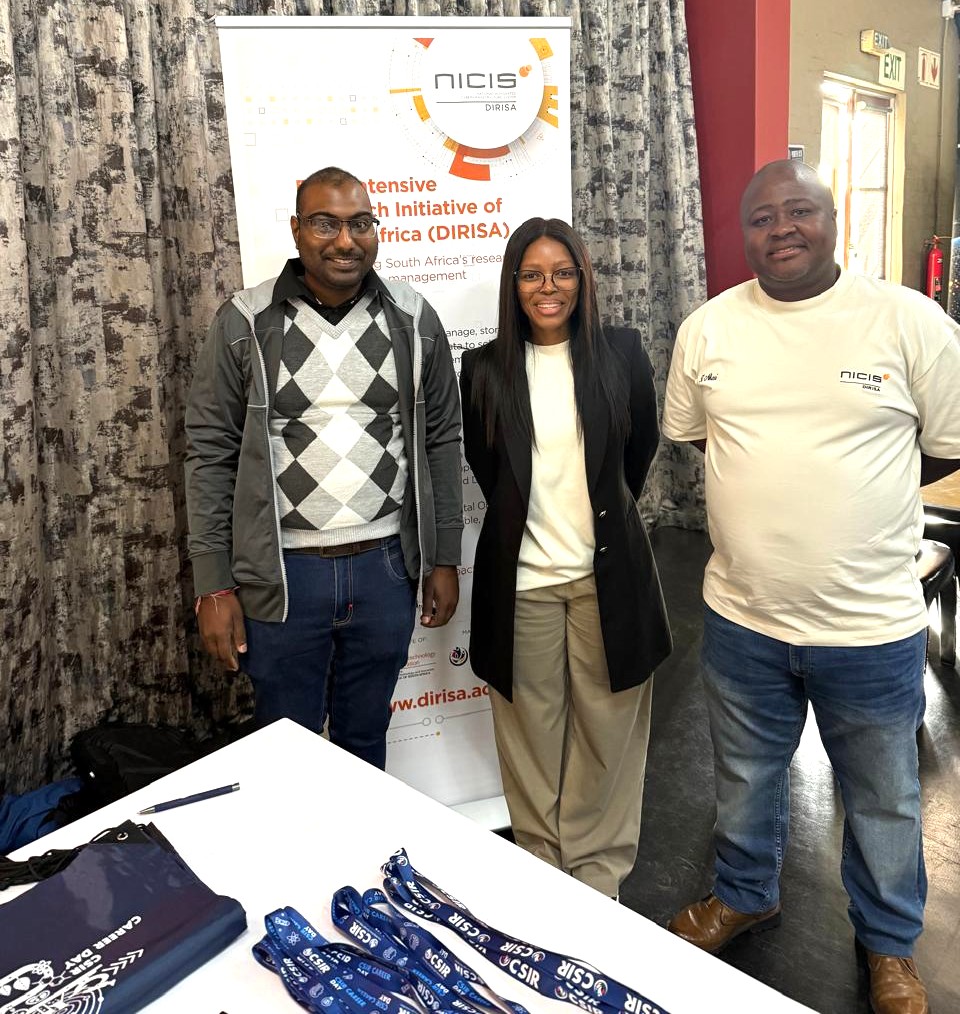
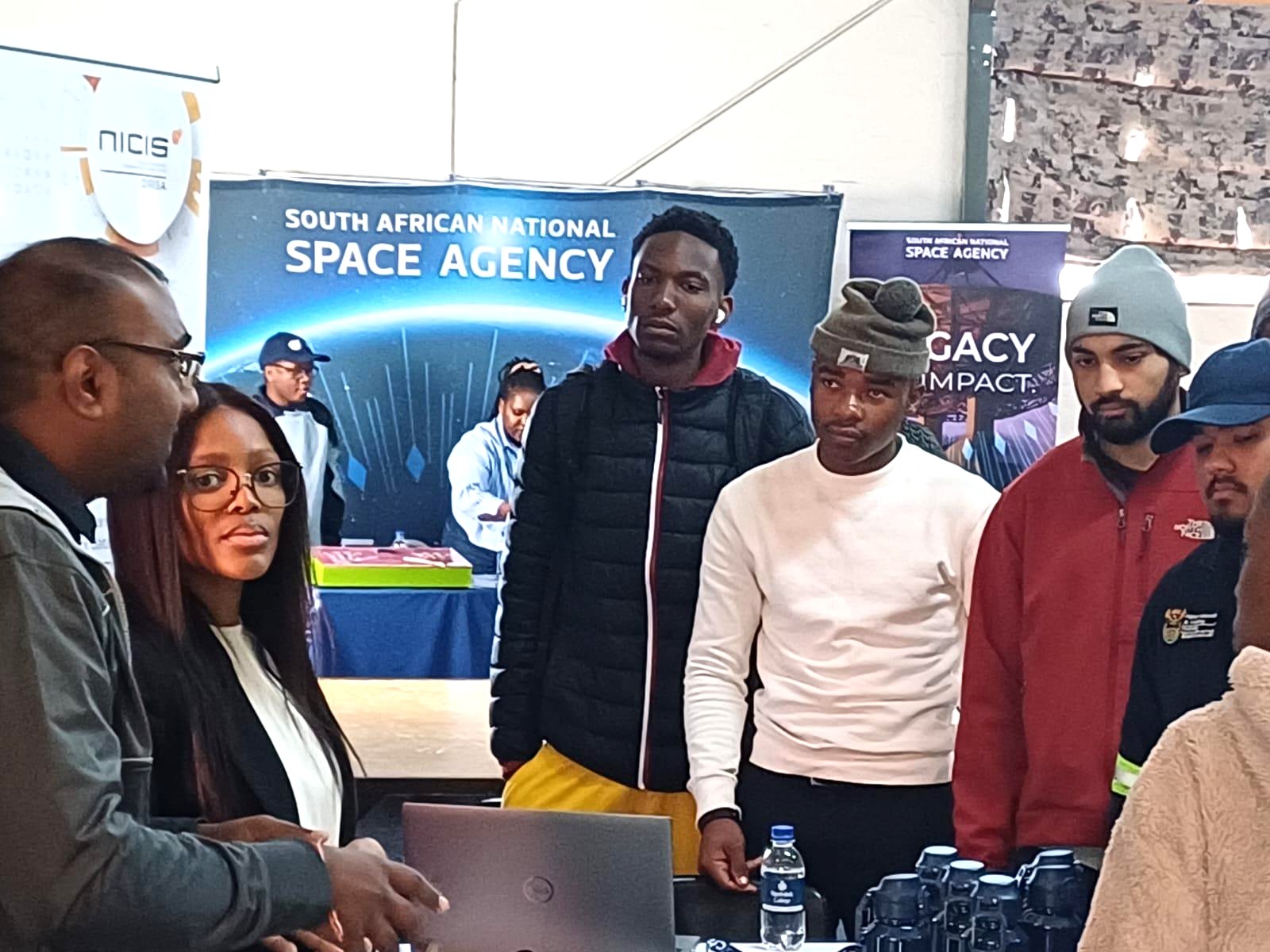
#TeamCSIR specialists (from left) Kirodh Boodhraj, Zandile Zungu and Xolani Nkosi attended this year’s Space Innovation Hub Public Lecture, held at Northlink College in Bellville, Cape Town, showcasing the CSIR’s space research and innovation capabilities.
With a focus on training the next generation of engineers, scientists, technicians and entrepreneurs, the programme was set in motion with an overview of the Space Infrastructure Hub skills development programme, a flagship human capital initiative led by the South African National Space Agency (SANSA) alongside the National Research Foundation (NRF).
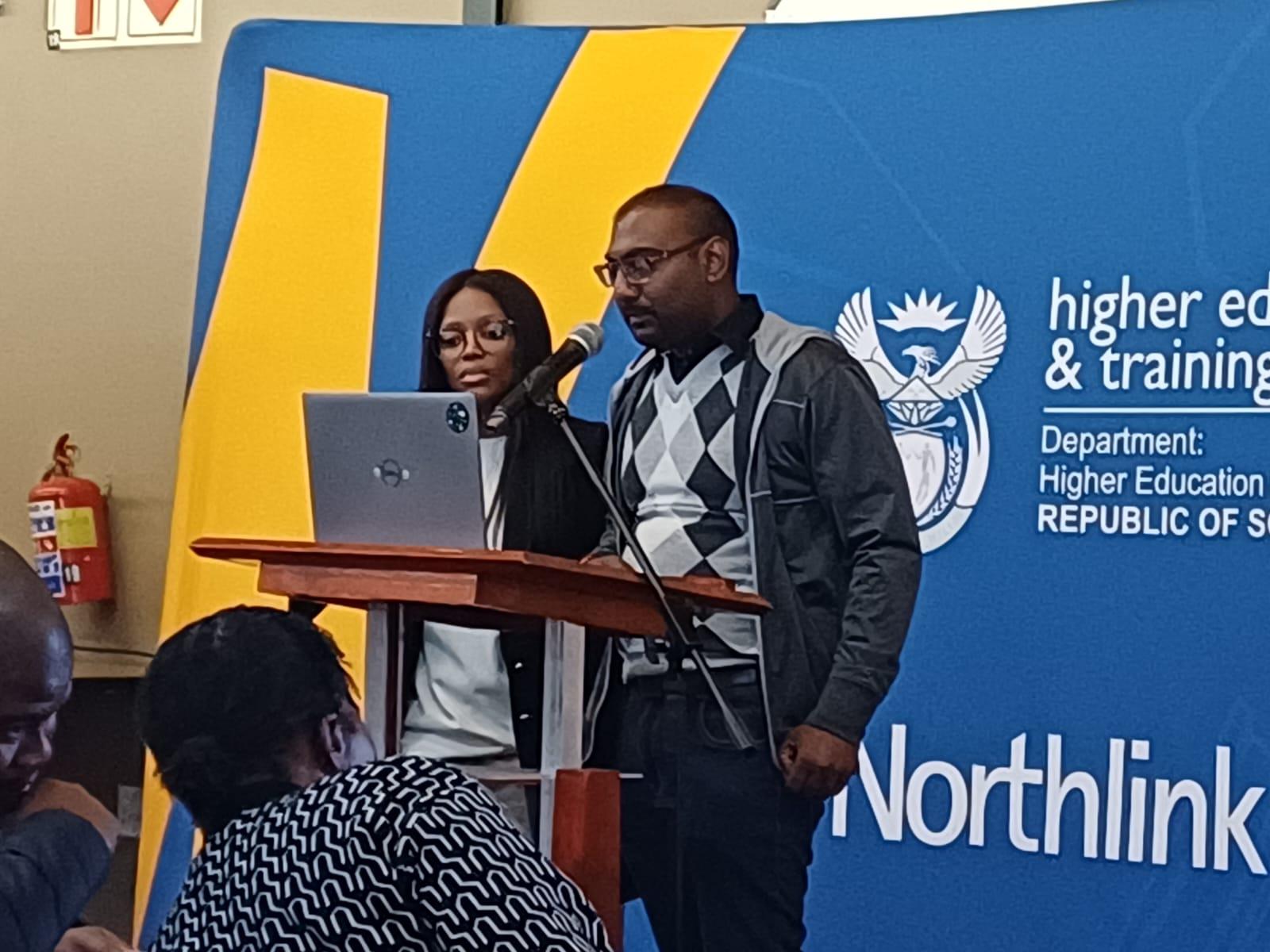
CSIR researcher Kirodh Boodhraj, senior project manager Zandile Zungu and project coordinator Xolani Nkosi shared talks on the role of information technology (IT) in space science by drawing on projects and evidence-based case studies in CSIR bespoke technologies.
Prominent TVETs such as Northlink College contribute to space science and the broader space economy by supplying the specialised technical, mechanical and artisan workforce required to build, maintain and service high-tech infrastructure.
Speaking to the college’s engineering, automotive and occupational trade students, Zungu and Nkosi shared updates on the regional reach and impact of human capital development initiatives of the Data Intensive Research Initiative of South Africa (DIRISA), a part of the CSIR-managed National Integrated Cyber Infrastructure System. “Between 2023 and 2025, the DIRISA Coding School and Student Datathon trained more than 800 learners and students in data science across South Africa's provinces. Building on this success, we are excited to extend our reach to the wider SADC region,” said Zungu.
Workshops have been held since 2019 to advance data literacy, research data management services and sound data practices. Training is also offered for educators, researchers and university librarians. Furthermore, national outreach activities have involved roadshows at public universities and the co-supervision of university postgraduate students and publication outputs such as conference papers and articles.
At NorthLink College, internships and work-integrated learning are vital as they assist in bridging the gap between classroom theory and practical industry needs to tackle the country's high youth unemployment rate and help the students fulfil the 18-month experiential training needed to obtain a national diploma and build professional networks.
“At DIRISA, the internships and work-integrated learning have led to successful placements and the output of two software developers and one data scientist who has been permanently absorbed at the CSIR,” says Nkosi. “Two work-integrated learning students have completed their National Diplomas in Informatics and one data science internship is in progress.”
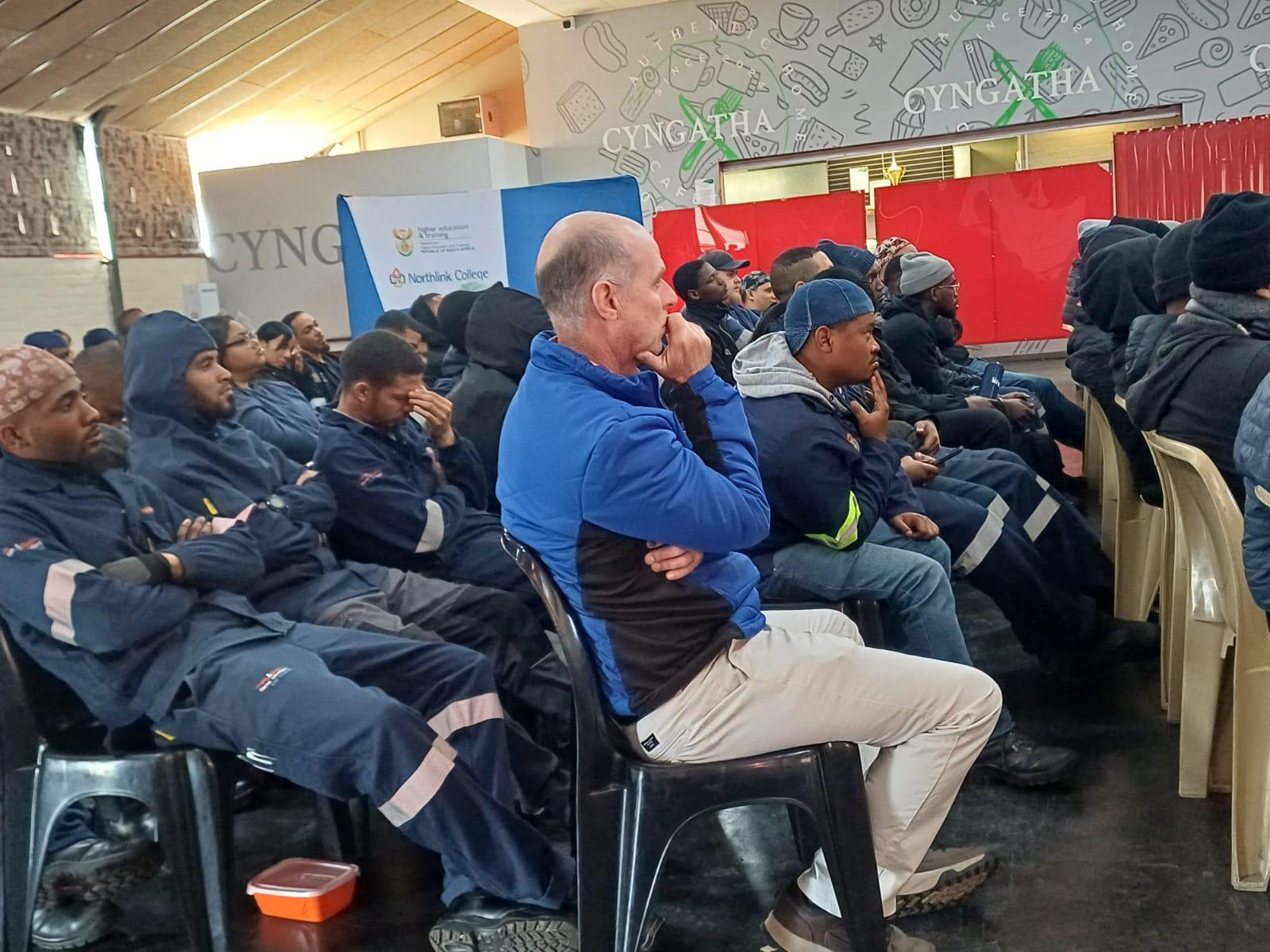
The space science economy as an ecosystem. Graduates from TVET colleges such as Northlink in Cape Town provide critical practical skills needed for manufacturing and ground operations, and play an important role in the science, technology and innovation landscape.
Boodhraj showcased the CSIR’s space science capabilities, including applying IT to real-life disasters such as wildfire risks in the Western Cape, with practical demonstrations of the advanced fire information system (AFIS), a satellite-based fire information tool that provides near real-time fire information to users across the globe. “Orbits and sensors draw on physics; software, databases and networks turn it into a decision on someone's screen,” Boodhraj explains. “Every step from orbit to alert is an IT problem: data ingestion, image-processing algorithms, geospatial databases, cloud services, application programming interfaces and mobile notifications.”
As DSTI entities, the NRF, the South African Agency for Science and Technology Advancement, the South African Astronomical Observatory, the CSIR and SANSA were favourably represented on the programme, stimulating debate and discussion among participants on topics that focused on distinguishing between astronomy and space science, the role of space science in service delivery, the applicability of space science in our daily lives, and space science career opportunities aligned with vocational skills.
Published 15 October 2026