The Transnet National Ports Authority (TNPA) is using the Council for Scientific and Industrial Research (CSIR) metocean monitoring and numerical modelling capabilities to assess options for accommodating larger vessels at the Port of East London. The information generated will support decisions on possible changes to the port’s breakwater and their impact on wave conditions within the port.
Within the port basin,a CSIR-developed numerical wave model is being tested using two Teledyne RDI Workhorse Sentinel Acoustic Doppler Current Profilers (ADCPs). The instruments are positioned at depths of approximately 10 to 12 metres and are collecting measurements that help researchers understand wave conditions within the harbour.
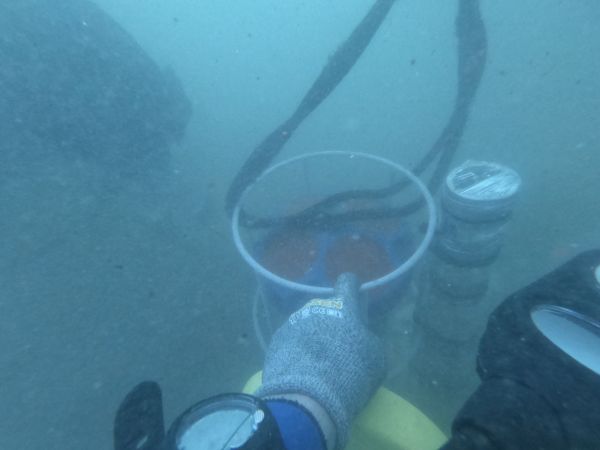
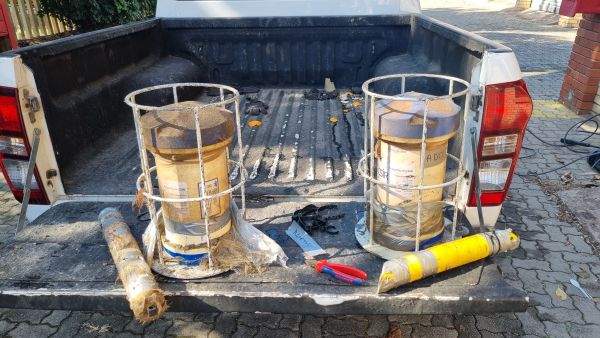
The CSIR has placed two Teledyne RDI Workhorse Sentinel Acoustic Doppler Current Profilers at the Port of East London. The instruments collect data that help researchers understand wave conditions within the harbour. Together with a CSIR-developed numerical wave model, the data will support the Transnet National Port Authority in assessing options to accommodate larger vessels at the port.
The ADCPs measure waves and currents, while pressure sensors record changes in water pressure. This enables the analysis of short-period and infragravity waves. The instruments also measure current speed and direction at different depths throughout the water column.
To measure currents, an ADCP emits high-frequency sound pulses or “pings”. The sound reflects off small particles and organisms carried by the water. Since these targets move with the current, the frequency of the returning sound changes slightly. This Doppler shift allows the instrument to calculate the speed and direction of the water movement.
“Although measuring currents was not part of the original project scope, we included it because the data may be useful in the future,” says Sarel Haasbroek, CSIR senior technologist, who led the technical work. “We also deployed two RBRduo pressure recorders near quays five and six at the port. They sample pressure twice per second, allowing us to analyse short-period waves, infragravity waves and tidal changes.”
The measurements will help the research team calibrate and validate the numerical model as it simulates how waves interact with port structures, including breakwaters. The data are also used as input for a dynamic mooring analysis of ships moored within the port. By comparing model results with observations from the harbour, the team can assess how different breakwater options may affect conditions within the basin.
Following discussions with the TNPA, CSIR senior coastal modeller Chris Troch, who conducted the original study for the authority, advised on suitable locations for the instruments.
Reliable measurements depend on careful installation and regular maintenance. Haasbroek worked with the TNPA dive unit to install the ADCPs on frames secured to the seabed. The instruments must remain stable and level, be aligned to magnetic north and be positioned to minimise the risk of sediment covering them.
Each month, the team visits the site to recover and clean the equipment, replace batteries, download data and prepare the instruments for deployment. “The sea is unforgiving, and even small errors can affect the equipment and the project results,” says Haasbroek. “Careful installation, servicing and configuration are essential for collecting reliable data.”
Implementation of the project involves close collaboration across the CSIR’s Coastal Engineering and Port Infrastructure research group in Stellenbosch. Haasbroek downloads and processes the measurements before passing them to CSIR technicians Ursula von Lorne von Saint Ange and Seithati Ntumelang for further processing and archiving in the CSIR database. Troch uses the processed data to inform the numerical wave and moored ship-motion models.
The CSIR will also interpret the measurements and report its findings to South Africa’s national port authority. Together, the field data and model results will help the TNPA build a clearer understanding of conditions beneath the surface and assess how potential breakwater changes could affect the Port of East London.
Published 19 October 2026